Notes from the workshop.
Writing on AI, data engineering and the infrastructure underneath it, from the founder building Certant. Notes from the work, not the marketing.
Why one chunk spanned three others in our chunk visualiser
Our chunk visualiser showed one chunk containing its neighbours. The chunker did it on purpose for tables, so we changed the default strategy for new knowledgebases.
Read the postTechnical
Engineering notes on data, models, infrastructure and the systems underneath them.
Streaming records into Strata with no continuous DuckDB writer
Producers POST batched NDJSON, we land immutable Parquet files, and a DuckDB view created once reads the folder at query time. No loader, no broker.
Read the postThe completeness illusion: four ways our document status was wrong
Four pipeline checks confirmed a step had run but not what it produced. Three reported failures that weren't real and one passed a degraded document.
Read the post14 to 17 seconds down to 0.3: caches that expire when the data changes
A knowledgebase page made six duplicate reads per load and took 14-17 s on every reload. Generation numbers, single-flight and 24 h TTLs got it to 0.3 s.
Read the post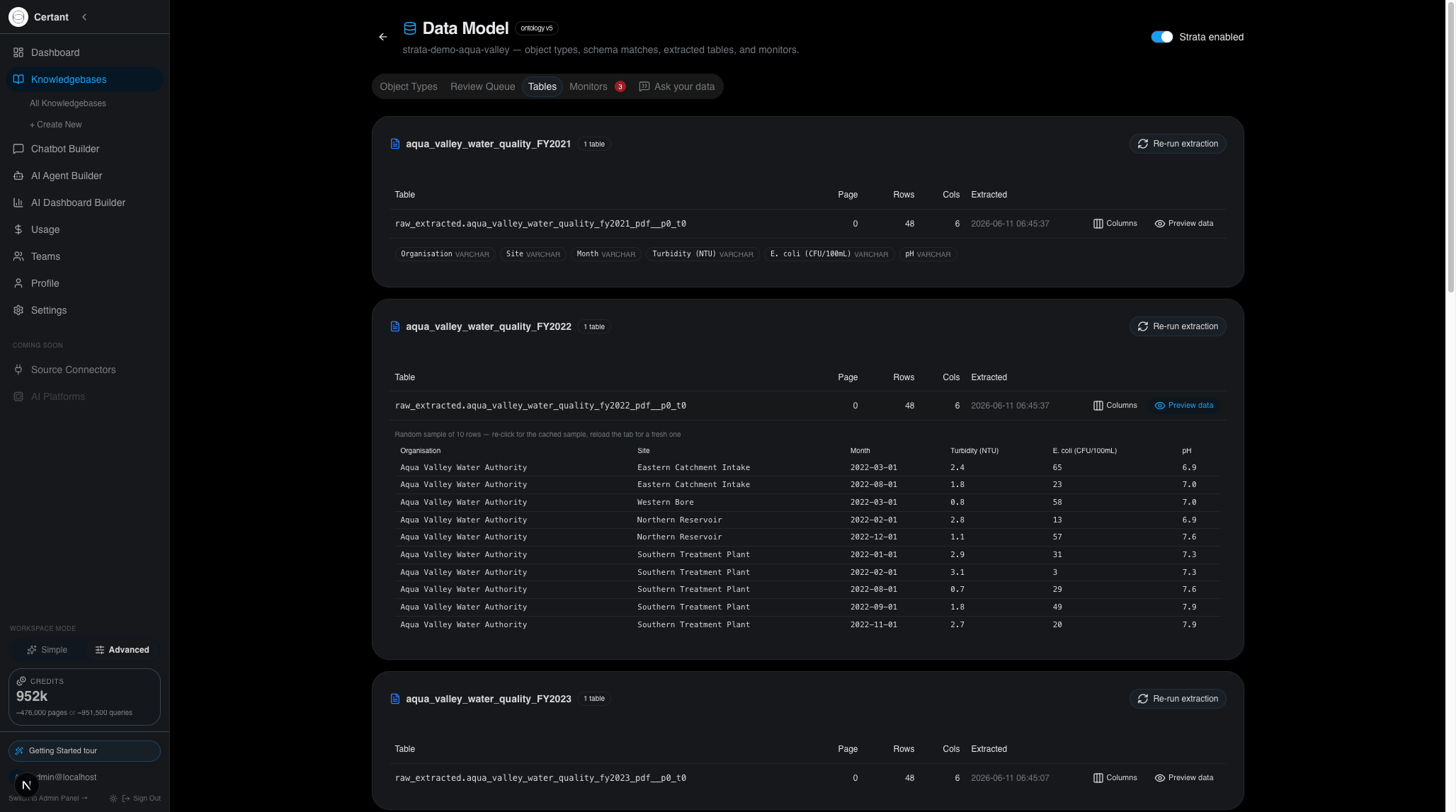
Getting Strata to corpus scale: a 149,000-token prompt and a DuckDB lock storm
Synthesis died at 257 tables. Schema families cut the prompt 24x and snapshot-then-think profiling made table profiling 6x faster.
Read the postA pending PostgreSQL lock blocks every reader, and it took us down twice
A backup and a stuck transaction each left an ALTER TABLE waiting, and every SELECT queued behind it. How we found both and the rules we run by now.
Read the postTwo locks that locked themselves: an fcntl.flock and a threading.Lock
Twice in seven weeks one thread asked for a lock it already held and froze our RAG service. Why, how we found it, and the reentrant fixes.
Read the post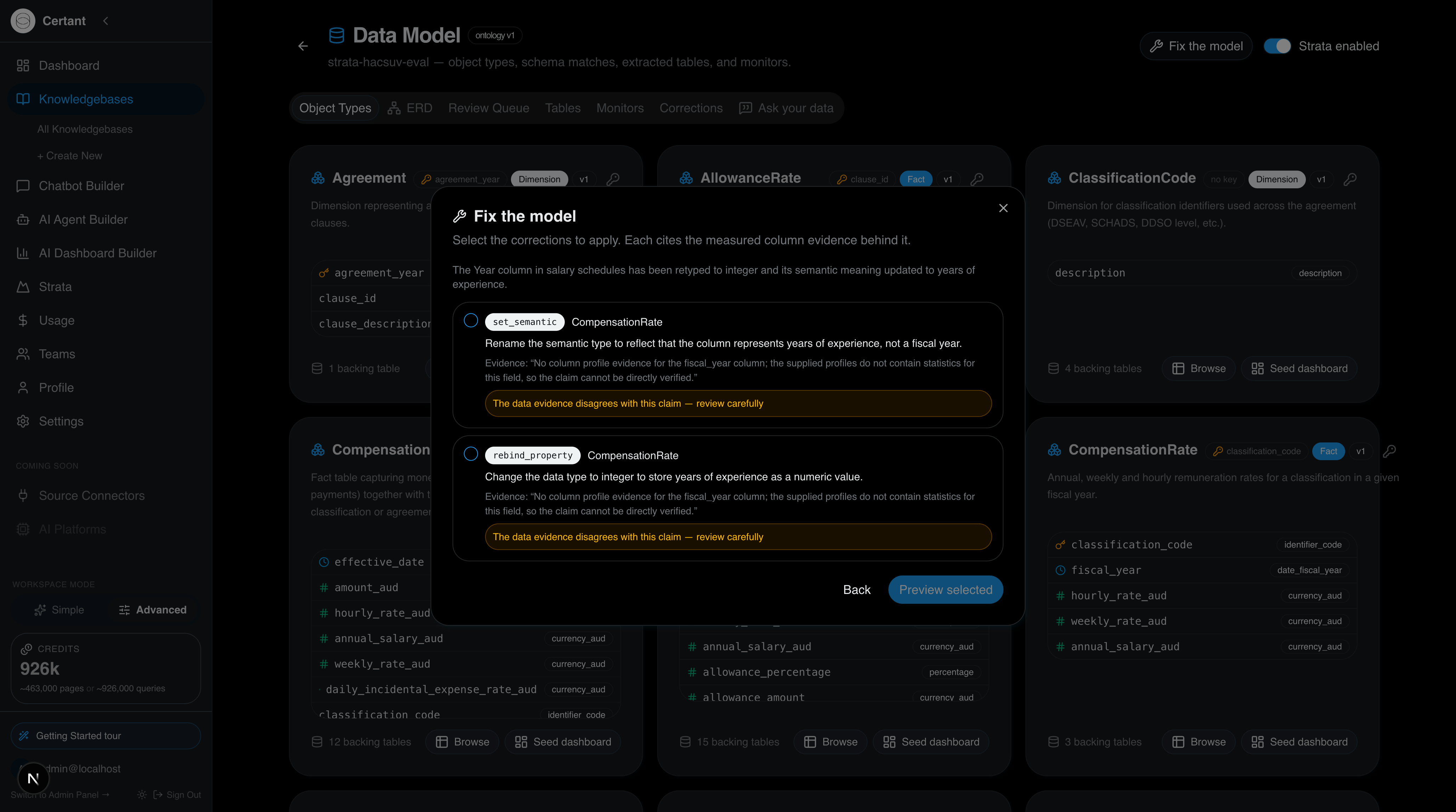
Teach it once: the corrections ledger
A Year column that meant years of experience broke our auto-built data model. Now one English sentence fixes it, and the fix survives every re-ingest.
Read the postThree instant retries turned one rate limit into an overnight 429 storm
An overnight ingest logged 307.2K rate-limit errors while the provider's concurrency sat flat. The gateway's instant retries were the cause.
Read the postOne bad LLM response in 597 chunks: how FIRST_EXCEPTION failed our biggest documents
A malformed 200 from the model cancelled a whole batch of good extraction results, and bigger documents were far more likely to hit one. The fix and the pattern.
Read the post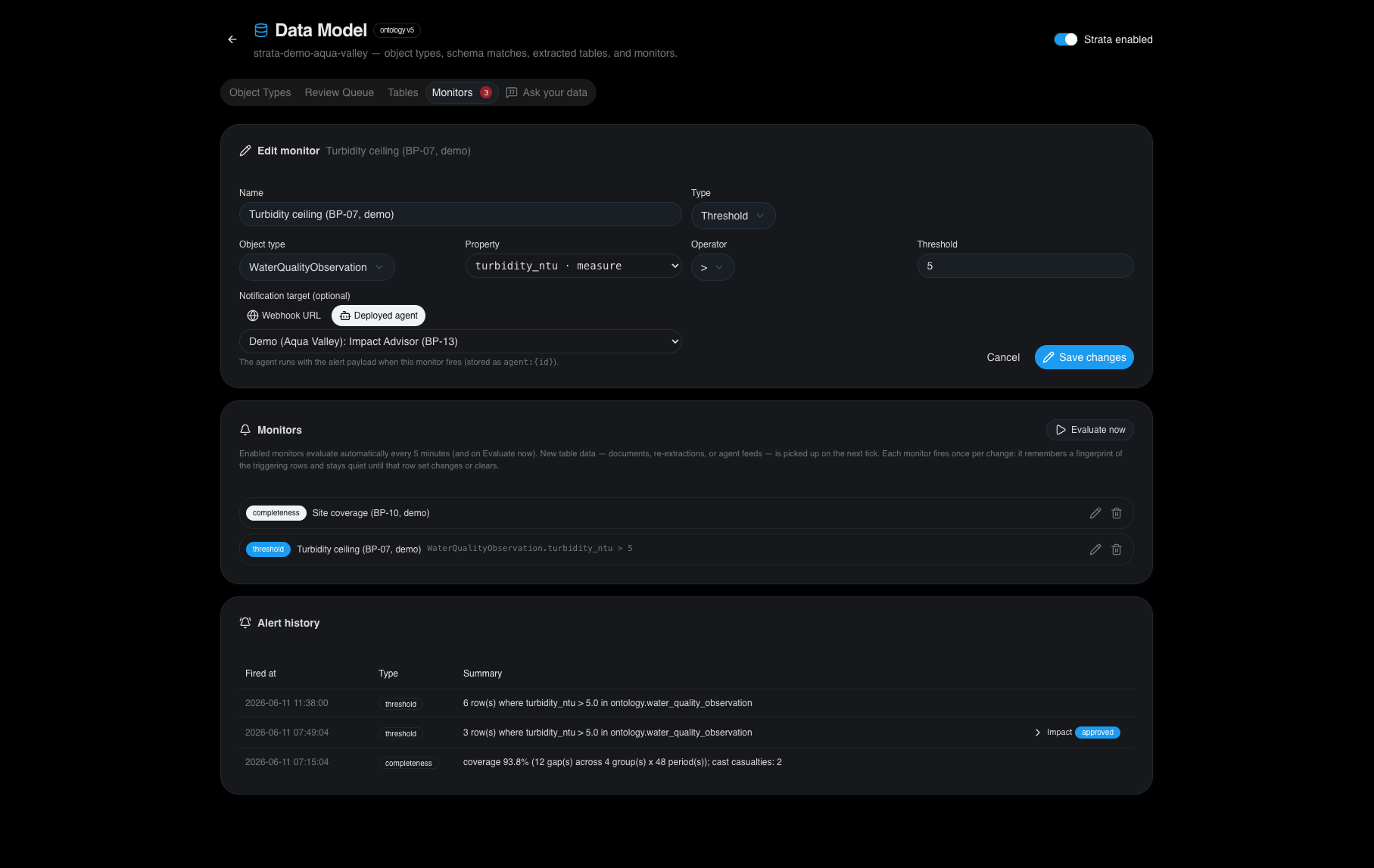
From a threshold breach to an approved action
How a Strata monitor detects a breach, counts the blast radius from the ontology, and parks the fix in an approvals inbox until a person signs it off.
Read the postAutograd was on: 3 GB per highlighted chunk and eight OOM kills in three days
Citation highlighting ran a Hugging Face model with autograd enabled. Each chunk kept 3 GB it never gave back. One line of torch.inference_mode() fixed it.
Read the postGraph retrieval was 70x slower than it needed to be
Every index was in place and a one-hop graph lookup still took 28 seconds. Replacing Apache AGE Cypher with direct SQL made it sub-second.
Read the post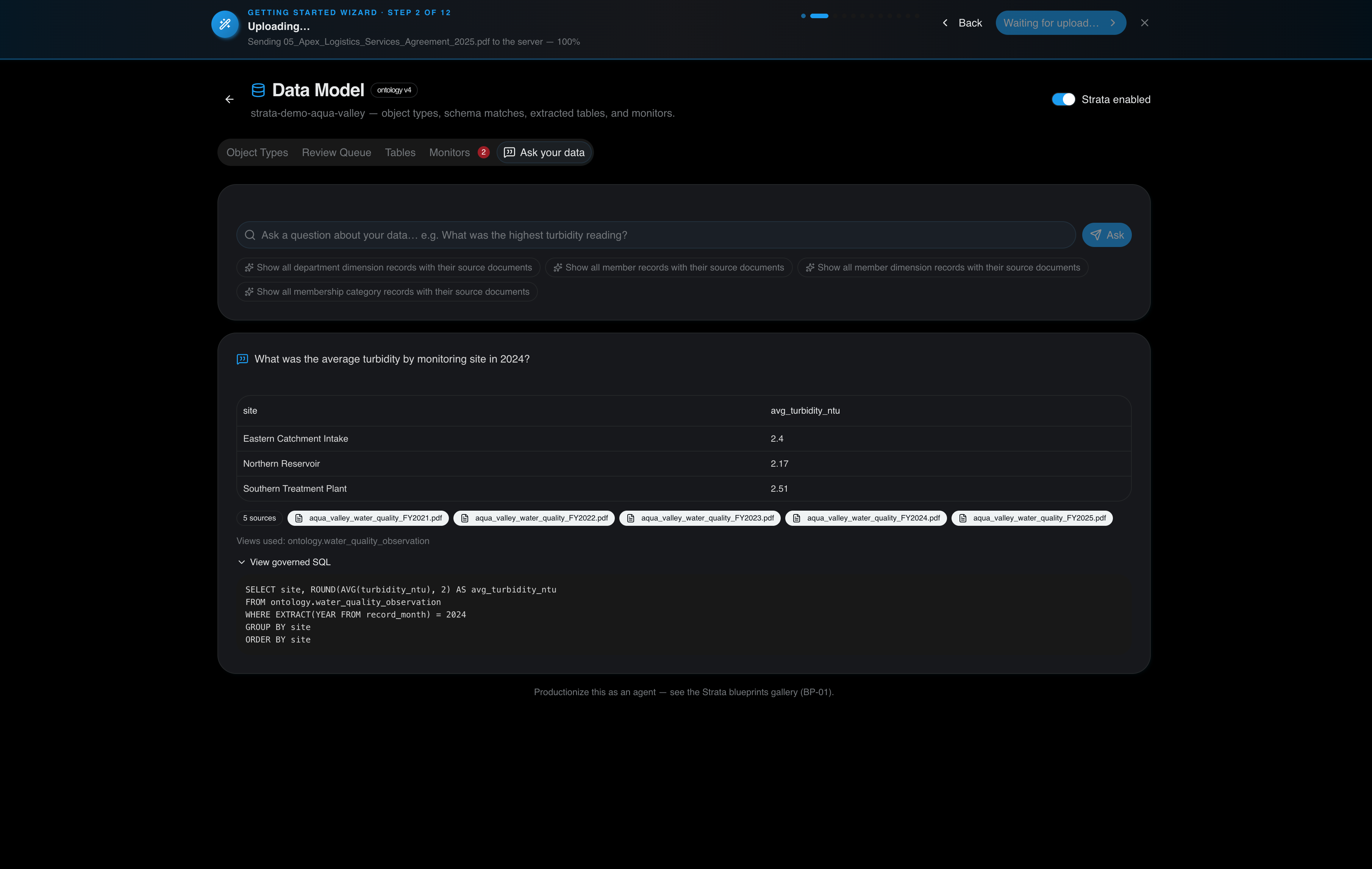
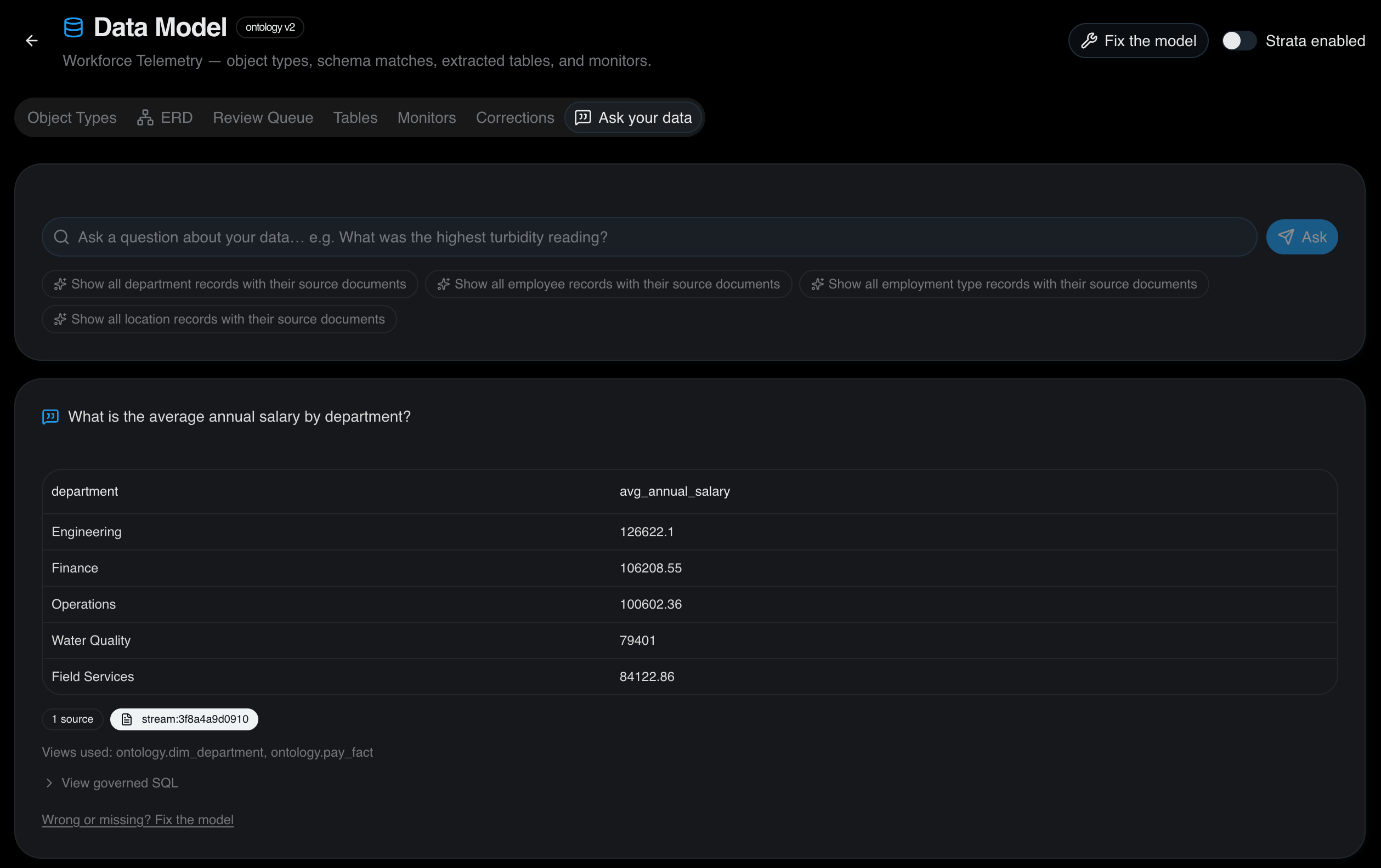
Ask your data in English, get governed SQL or an honest no
How Certant Strata turns a question into governed SQL with one temperature-0 call and a guard, and what the user sees when it refuses.
Read the postA $169-a-month VM beat serverless and Kubernetes for our stack
We priced Fargate, Cloud Run, Container Apps and managed Kubernetes against one $169/month VM, then kept the VM and built blue/green deploys on it.
Read the postFour data-loss bugs that came from one dict merge
Four vector-store bugs lost up to 71% of chunks and entities without raising an error. All four trace back to one unguarded write-behind merge.
Read the post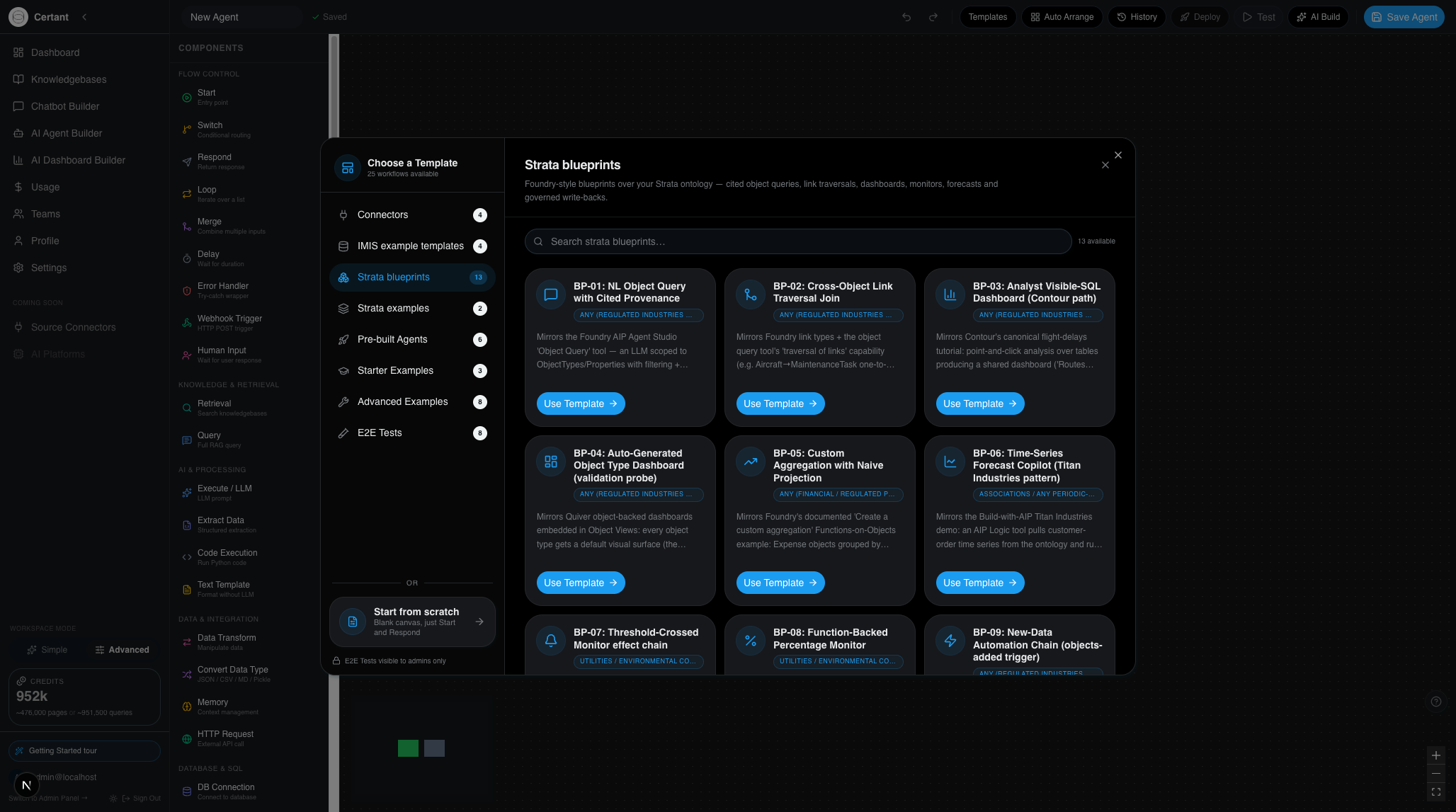
Certant Strata and Palantir Foundry / AIP, feature by feature
I graded our ontology product against the nine things a Foundry / AIP engagement delivers. It scored three partials and six reds, and it leads at the document end.
Read the post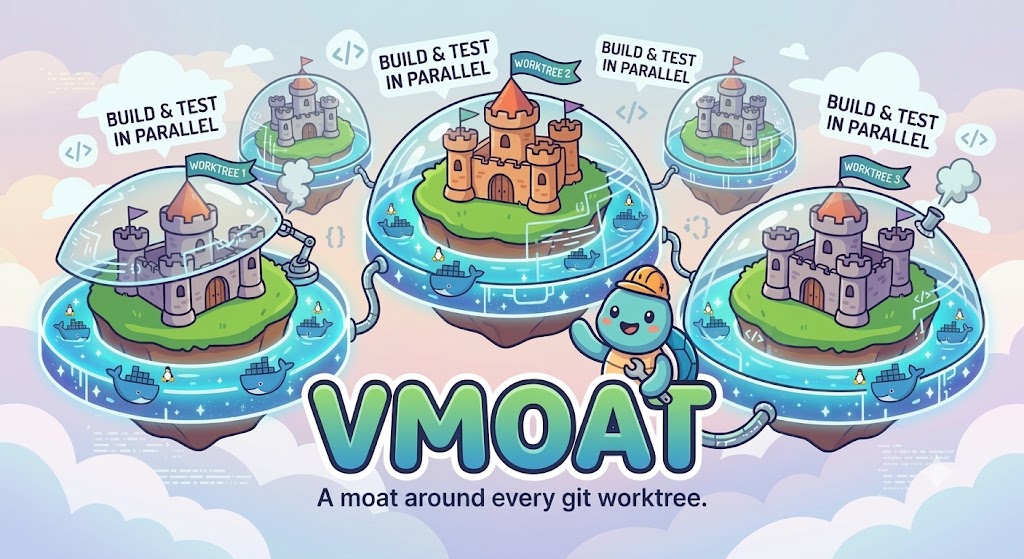
Running the whole RAG stack on a MacBook, one Colima VM per worktree
What really runs locally on Apple Silicon: a VM per git worktree, a pgvector SIGILL that never showed on OrbStack, and a PaddleOCR segfault we never fixed.
Read the postMissing tables, not the extraction model, explain the accuracy gap
Two knowledge bases, same corpus, different extraction models, the same 41.8% and zero disagreements. The failing questions all had their answers in tables.
Read the postA 0.6B model was starving on the CPU: moving citation highlighting to the GPU
Citation highlighting ate 50 s of a 71 s query on our DGX Spark. The encoder was tiny; the CPU was full. Moving it to the idle GPU: 3.6 s to 0.08 s per chunk.
Read the post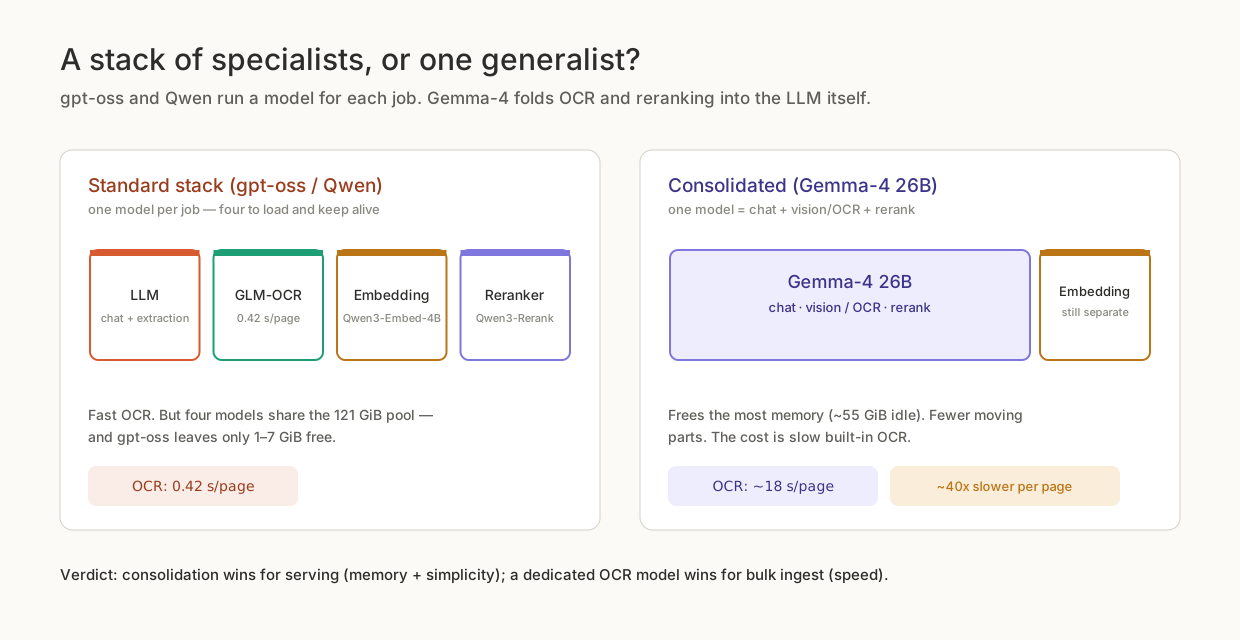
The Gemma-4 experiment: one model for chat, OCR and reranking
One Gemma-4 model runs chat, extraction and reranking on a DGX Spark. OCR stays a dedicated model: consolidated OCR runs 40x slower per page.
Read the post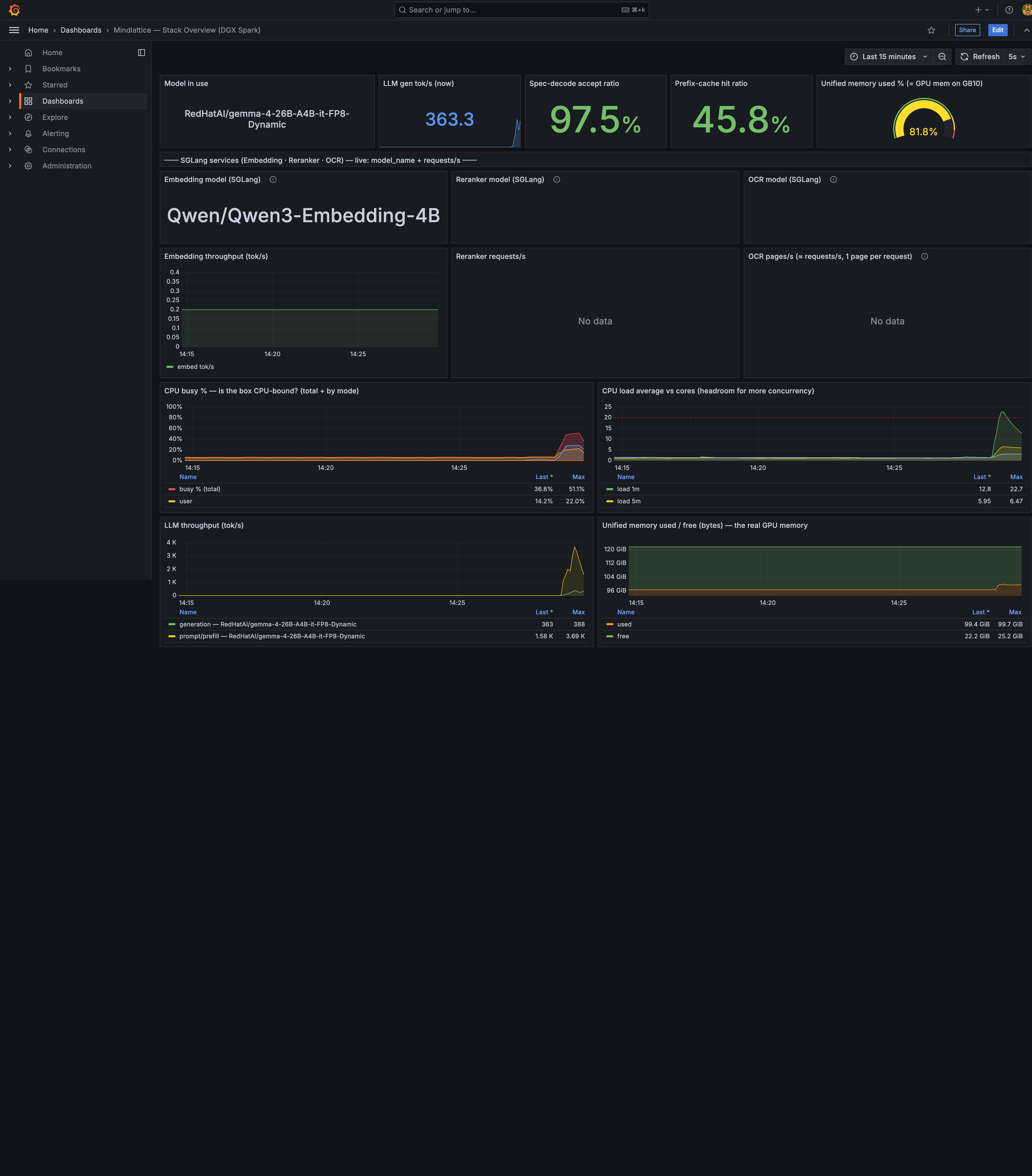
155 pages of OCR took 37 minutes. The bottleneck was one threading.Lock.
A lock around a single GPU model made OCR serial. Moving GLM-OCR to SGLang took a 155-page PDF to under five minutes. The RunPod and client-side details.
Read the post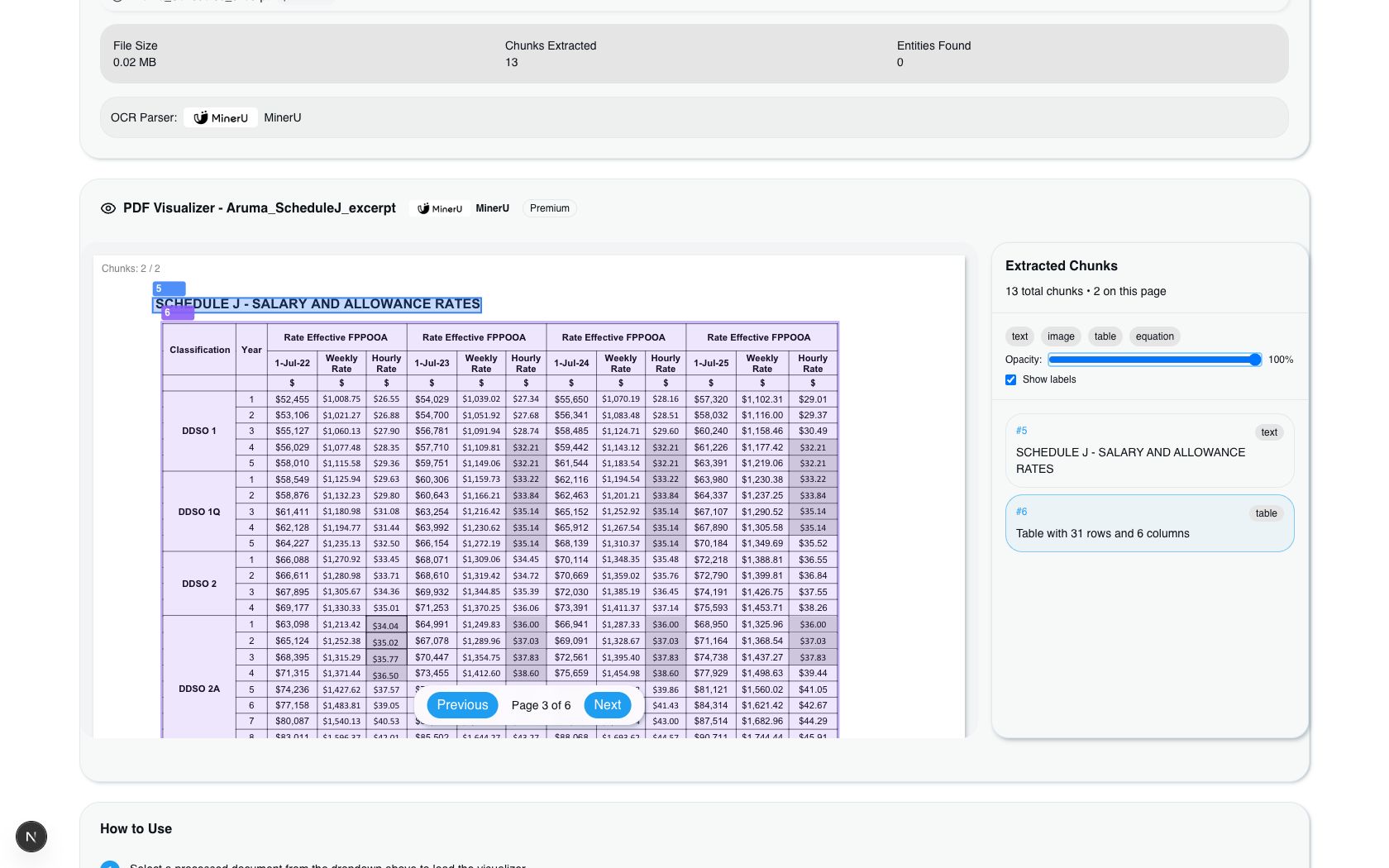
Five OCR engines and one enterprise agreement: what actually read the rate tables
MinerU, Docling, PaddleOCR, GLM-OCR and Baidu Unlimited-OCR on the same wage schedules. Rowspans, a silent under-extraction bug, and what we run now.
Read the post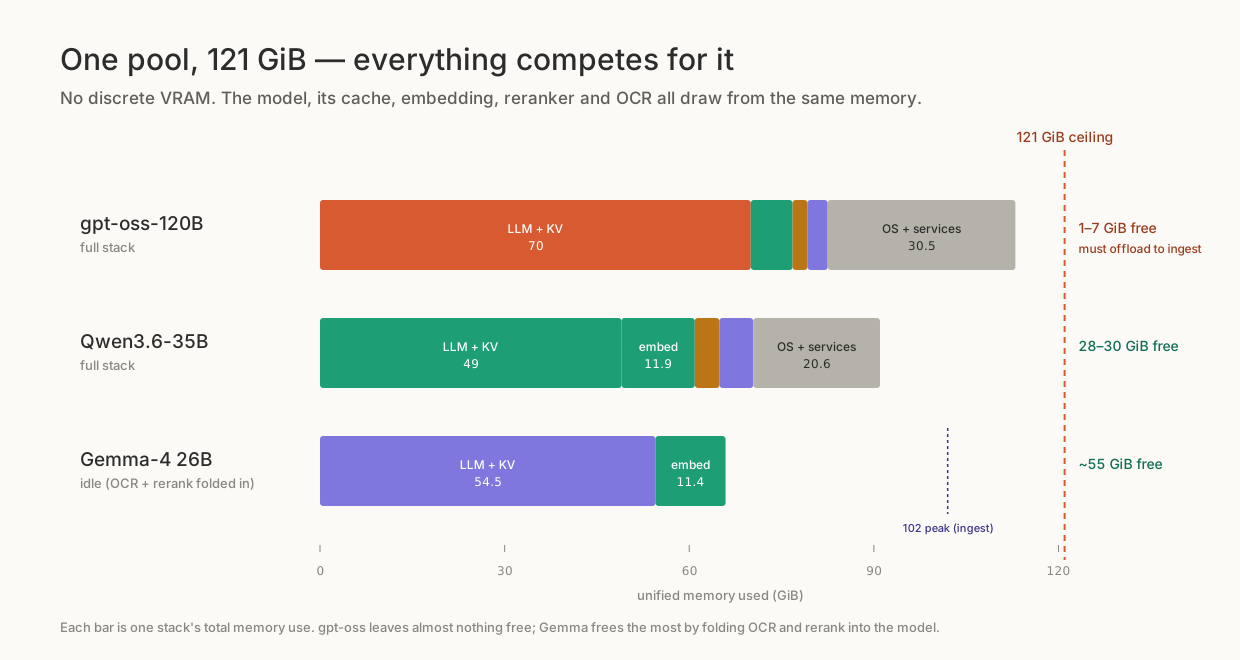
Why Qwen3.6 with thinking off became our DGX Spark default
Swapping gpt-oss-120B for Qwen3.6-35B gave back 25 GiB on the GB10, and one per-call reasoning flag took a merge summary from 189 s to 4 s.
Read the post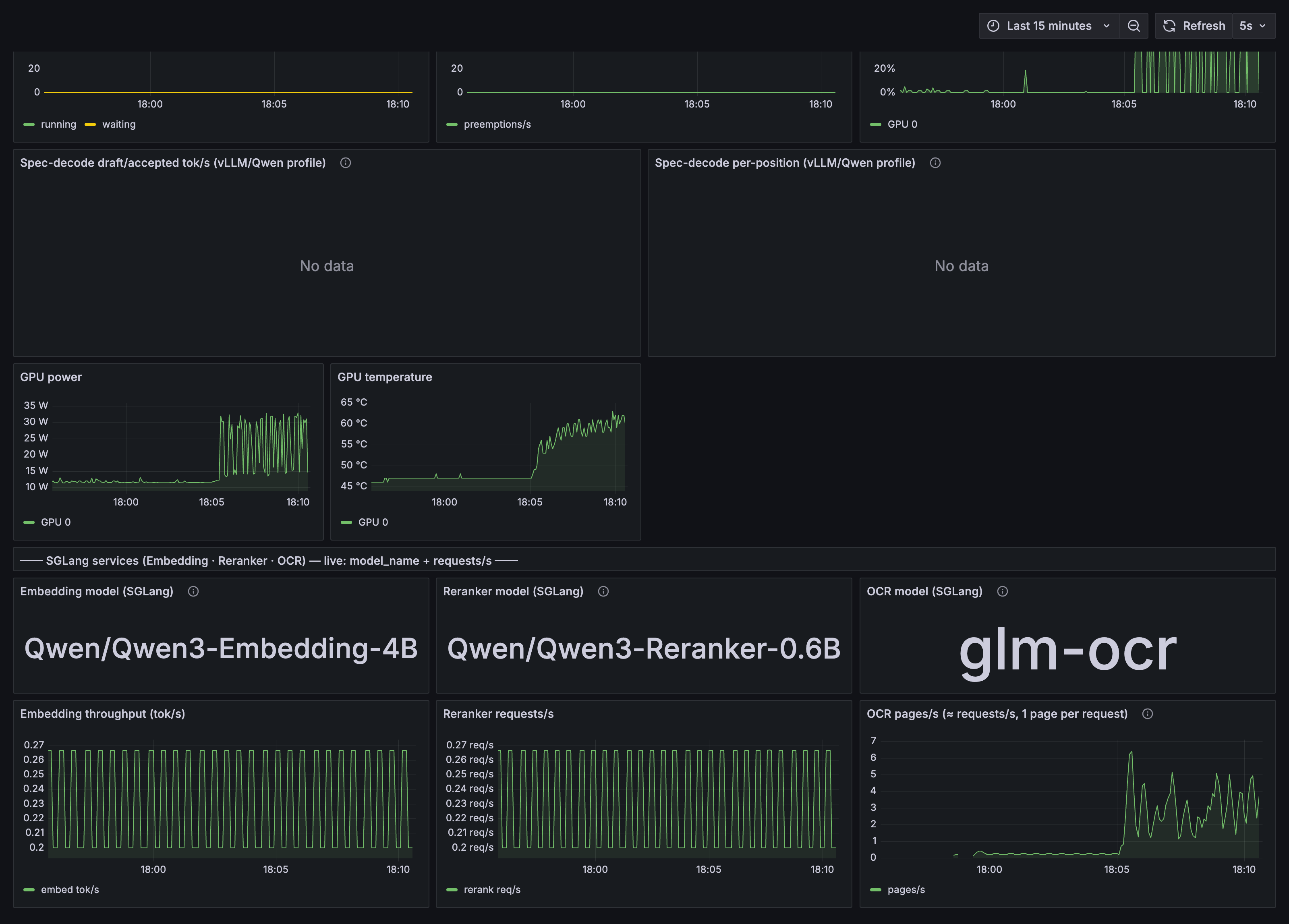
The standard stack: gpt-oss-120B and a full RAG pipeline on one box
Four models in 121 GiB of unified memory, 1 to 7 GiB free, and the boot loop that took a 64 GB swapfile to fix. The DGX Spark reference build, warts included.
Read the post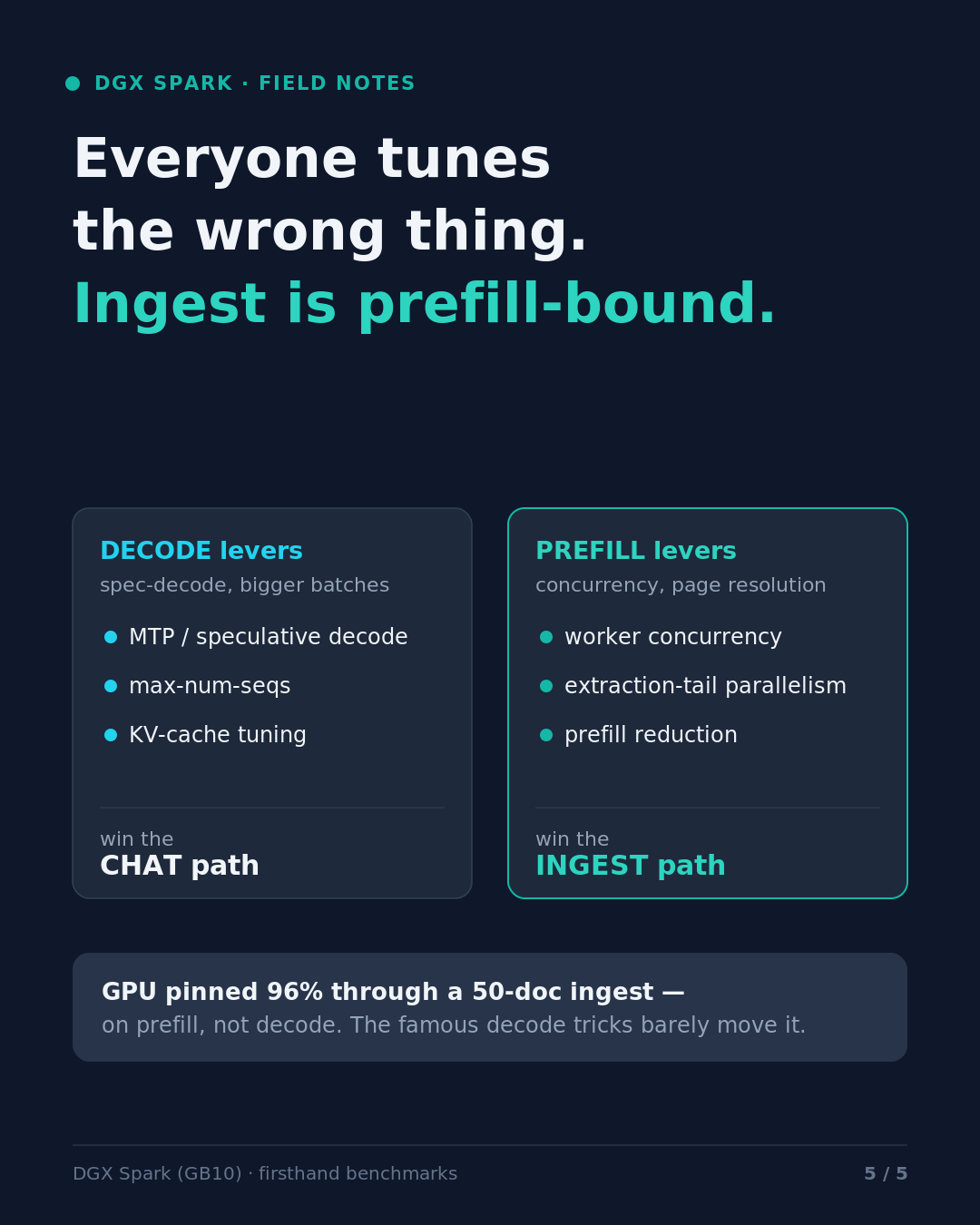
Most people tuning local LLMs optimise the wrong half of the problem
A full 50-document ingest pinned the GPU at 96% for 38 minutes, on prefill, not decode, while the celebrated decode levers barely moved throughput.
Read the post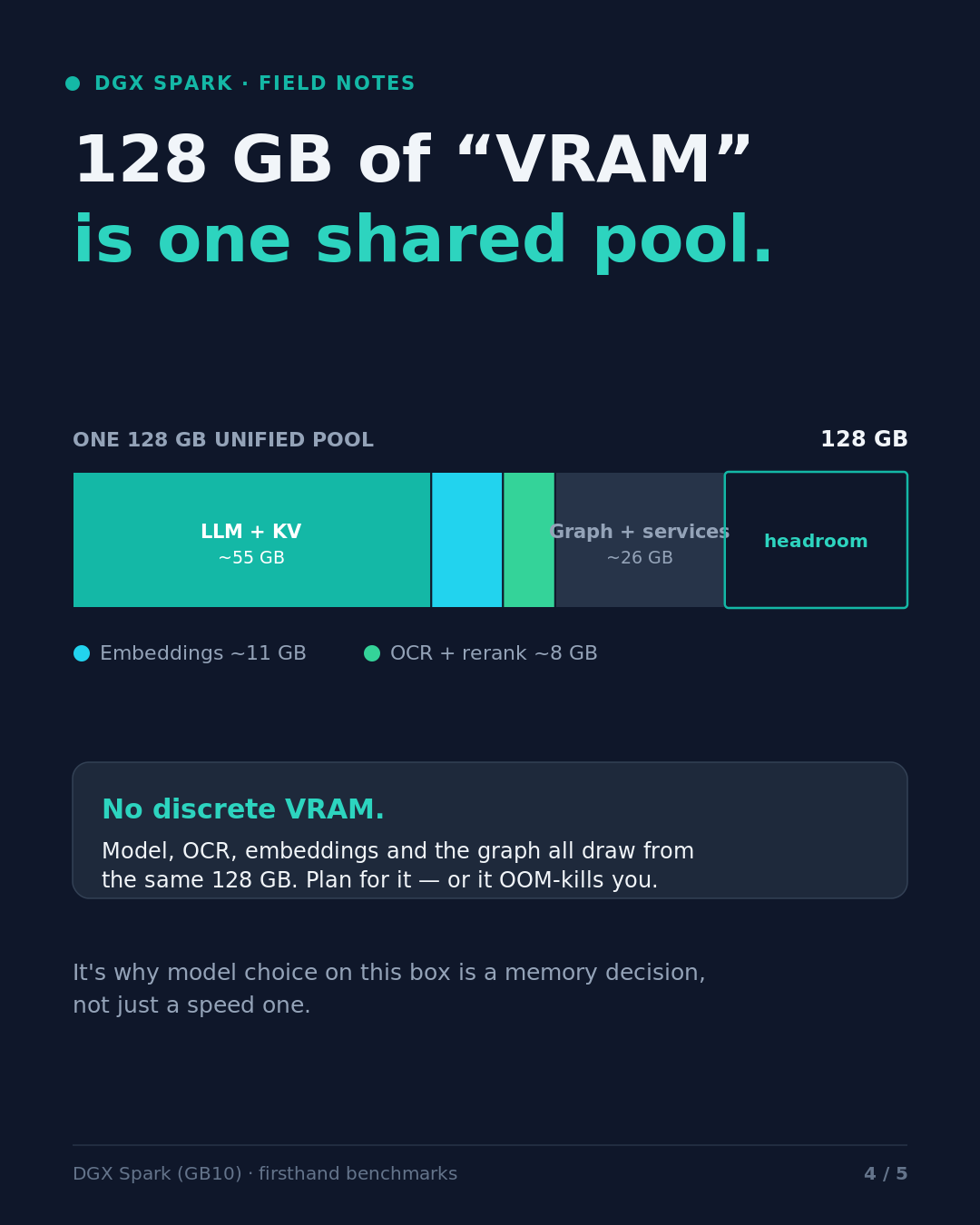
128GB of VRAM is the most misread spec on the DGX Spark
The DGX Spark's 128GB is one pool shared by CPU and GPU, not VRAM: the memory budget, the OOM spike, and what to set.
Read the post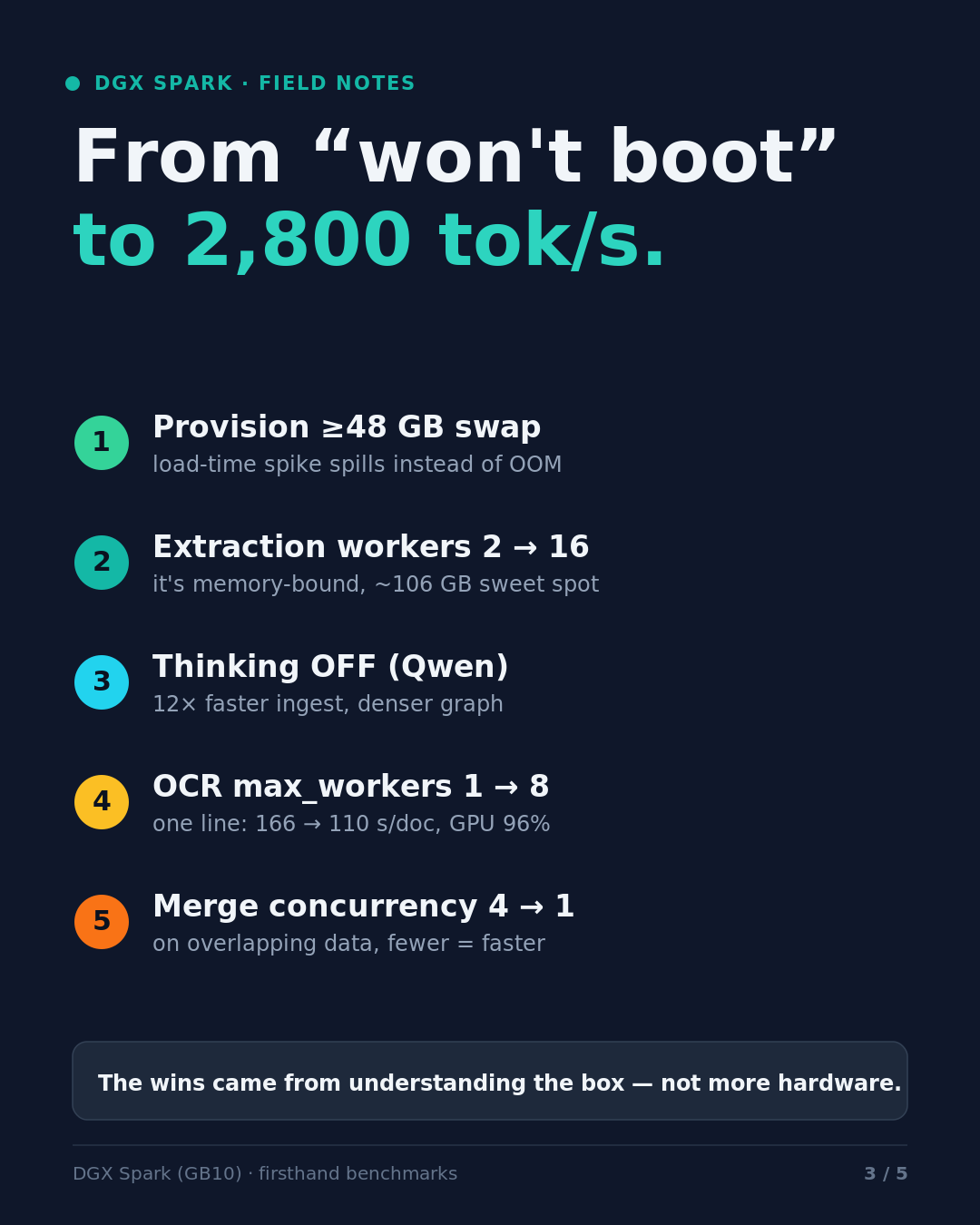
Seven levers that took a DGX Spark from won't boot to 2,800 tokens a second
Seven config changes took my DGX Spark from OOM-killing itself on boot to 2,800 tokens a second, measured before and after.
Read the post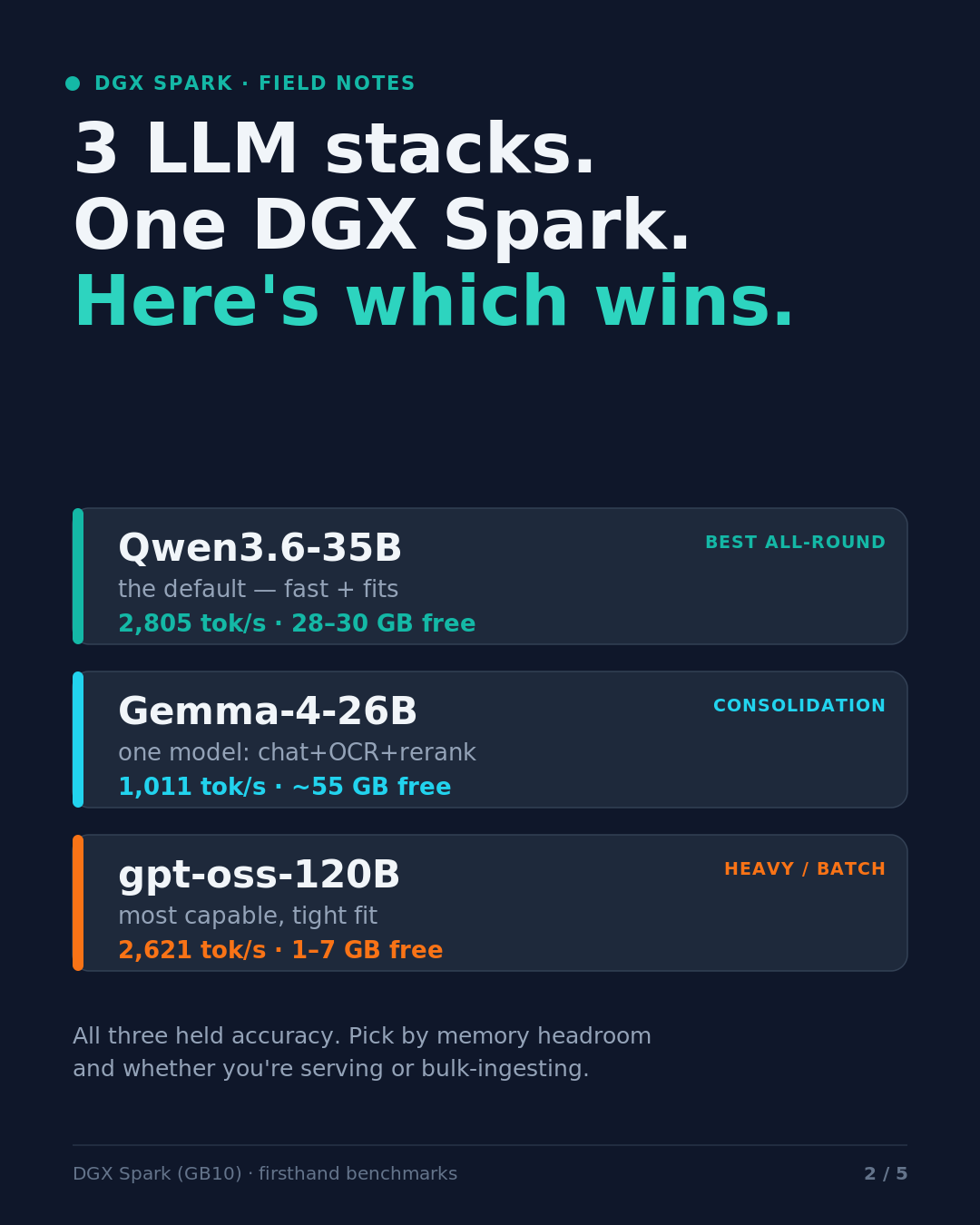
Which LLM should you run on a DGX Spark? gpt-oss-120B vs Qwen3.6-35B vs Gemma-4 26B
Three model stacks, one DGX Spark, a month of benchmarks: why Qwen3.6-35B with thinking off beats Gemma-4 26B and gpt-oss-120B on this box.
Read the postAsking for JSON halved our extraction recall. JSON Lines fixed it.
A graph-extraction regression traced to output shape: a closed JSON object tells the model to stop early. Removing the enclosing array recovered 2.7x.
Read the post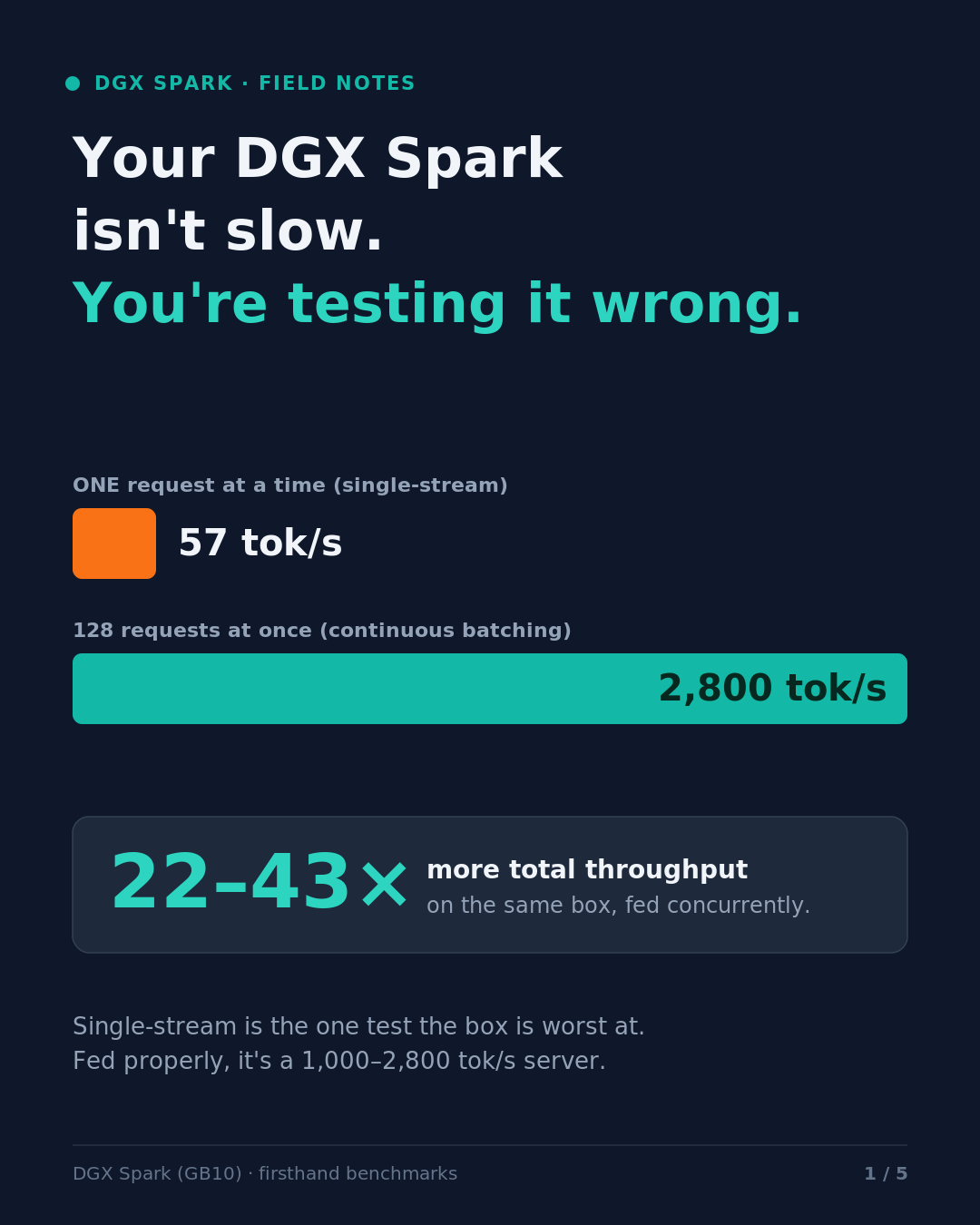
Stop chat-testing your DGX Spark
A single chat window is the one benchmark the DGX Spark is built to lose. The two hardware numbers behind that, and the 22-43x you get back from batching.
Read the post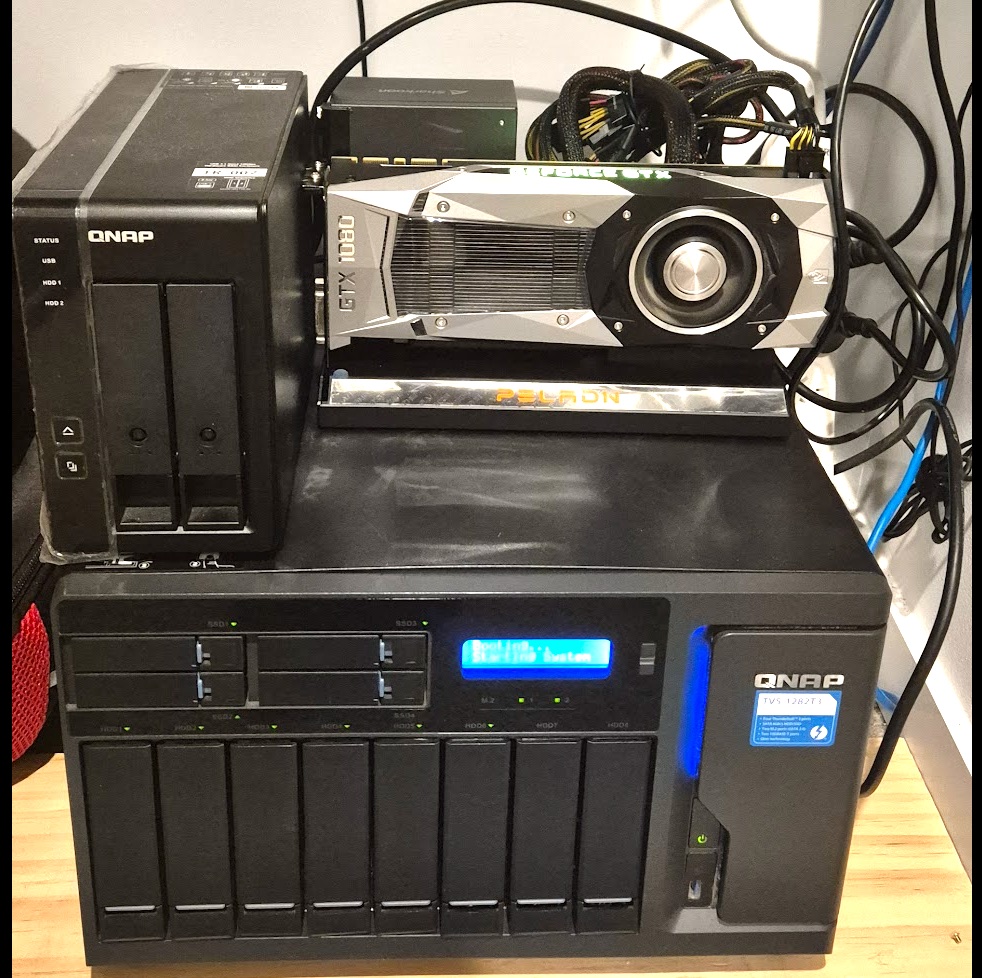
Getting vLLM v0.9.2 working on CUDA 12.4 on QNAP (Driver 550.76)
Getting vLLM v0.9.2 running on CUDA 12.4 with an older QNAP NAS and Nvidia driver 550.76 using a custom Docker build.
Read the post
Moving from Ollama to vLLM: Finding Stability for High-Throughput LLM Serving
An engineer's journey from using Ollama to vLLM for running large language models locally, exploring the trade-offs between convenience and production-grade stability for high-throughput inference.
Read the post
GraphRAG Is the Logical Step From Rag — So Why the Sudden Hype?
GraphRAG builds on RAG by using graph structures to organize data relationships, providing LLMs with richer context while avoiding hallucinations.
Read the post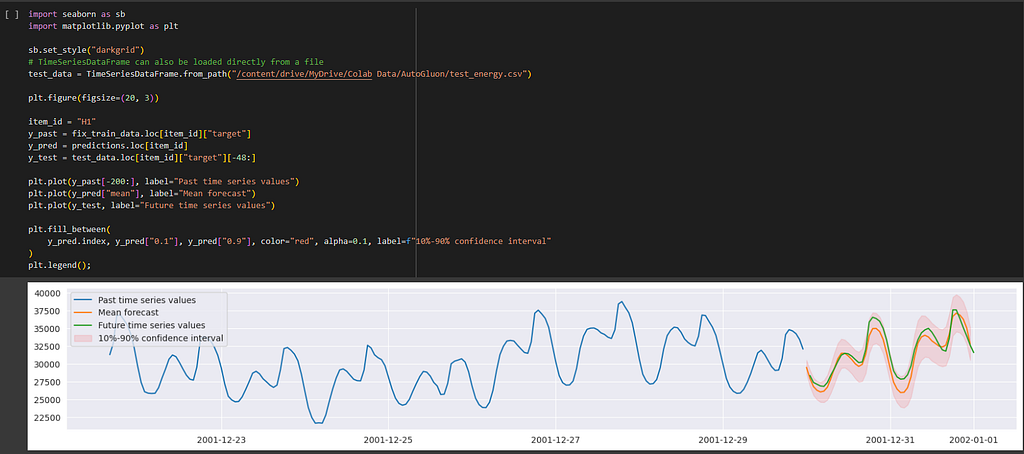
Revolutionising Machine Learning: Achieving Top 4% in Kaggle with AutoGluon in Just 7 Lines of Code
Discover how AutoML and AutoGluon can achieve competitive Kaggle rankings with just seven lines of Python code, automating feature engineering and model selection.
Read the post
Data Engineering: Fast Spatial Joins Across ~2 Billion Rows on a Single Old GPU
Explore GPU-accelerated spatial joins processing 2.3 billion rows on a consumer GTX 1060, comparing Parquet vs ORC performance for large-scale geospatial data.
Read the post
GPU Data Engineering, CSV to Parquet & ORC using Dask & RAPIDS.ai
Converting large CSV files to Parquet and ORC formats using Dask and RAPIDS.ai on consumer GPU hardware, with performance benchmarks and optimization strategies.
Read the postProduct
What we are building with Certant, and how it works in practice.
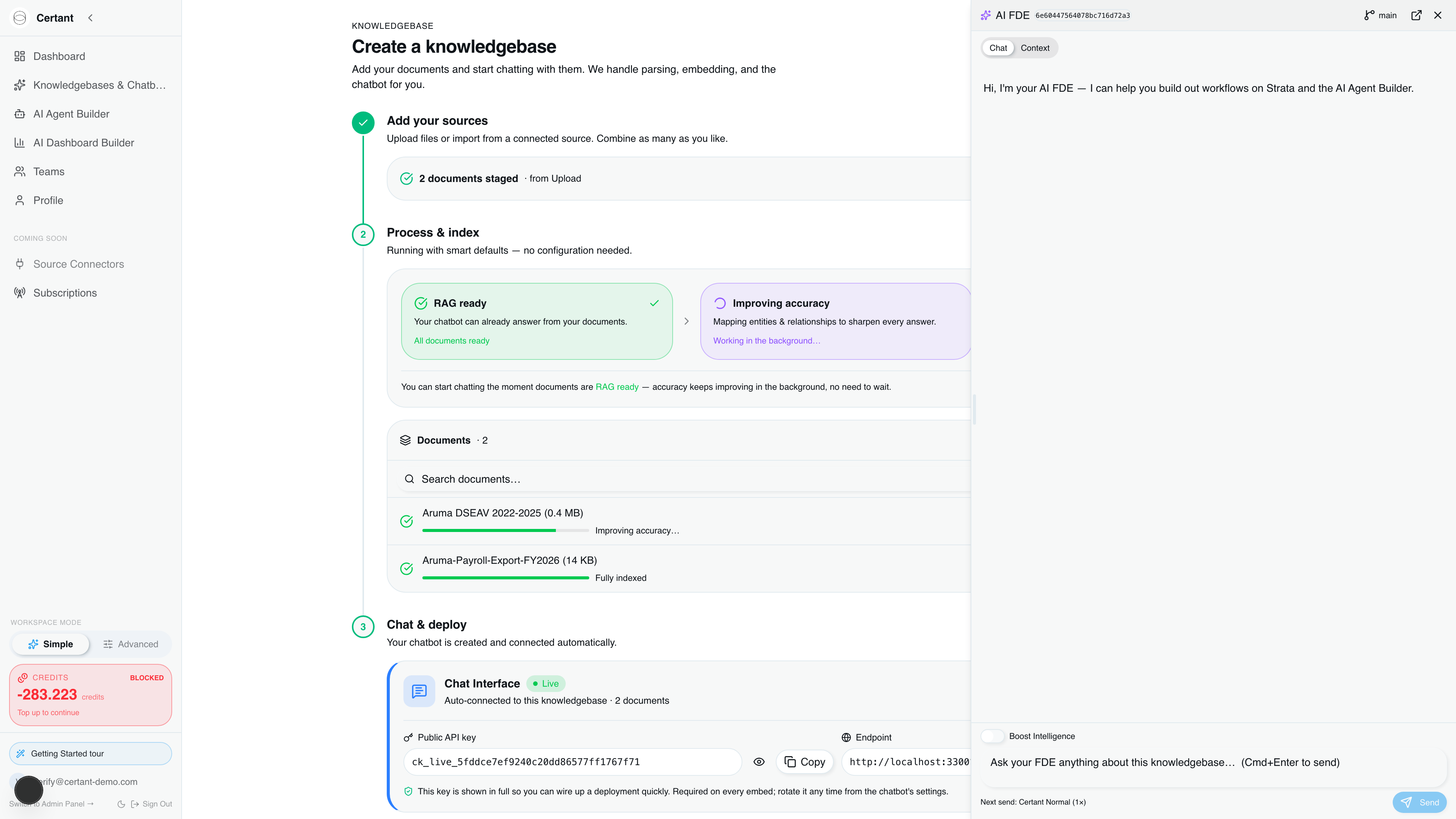
Four employees below their legal minimum: the Aruma scenario end to end
A screenshot-led walk through the Aruma pay-compliance run: bind a knowledgebase, ask in plain English, approve one correction, get four names back.
Read the post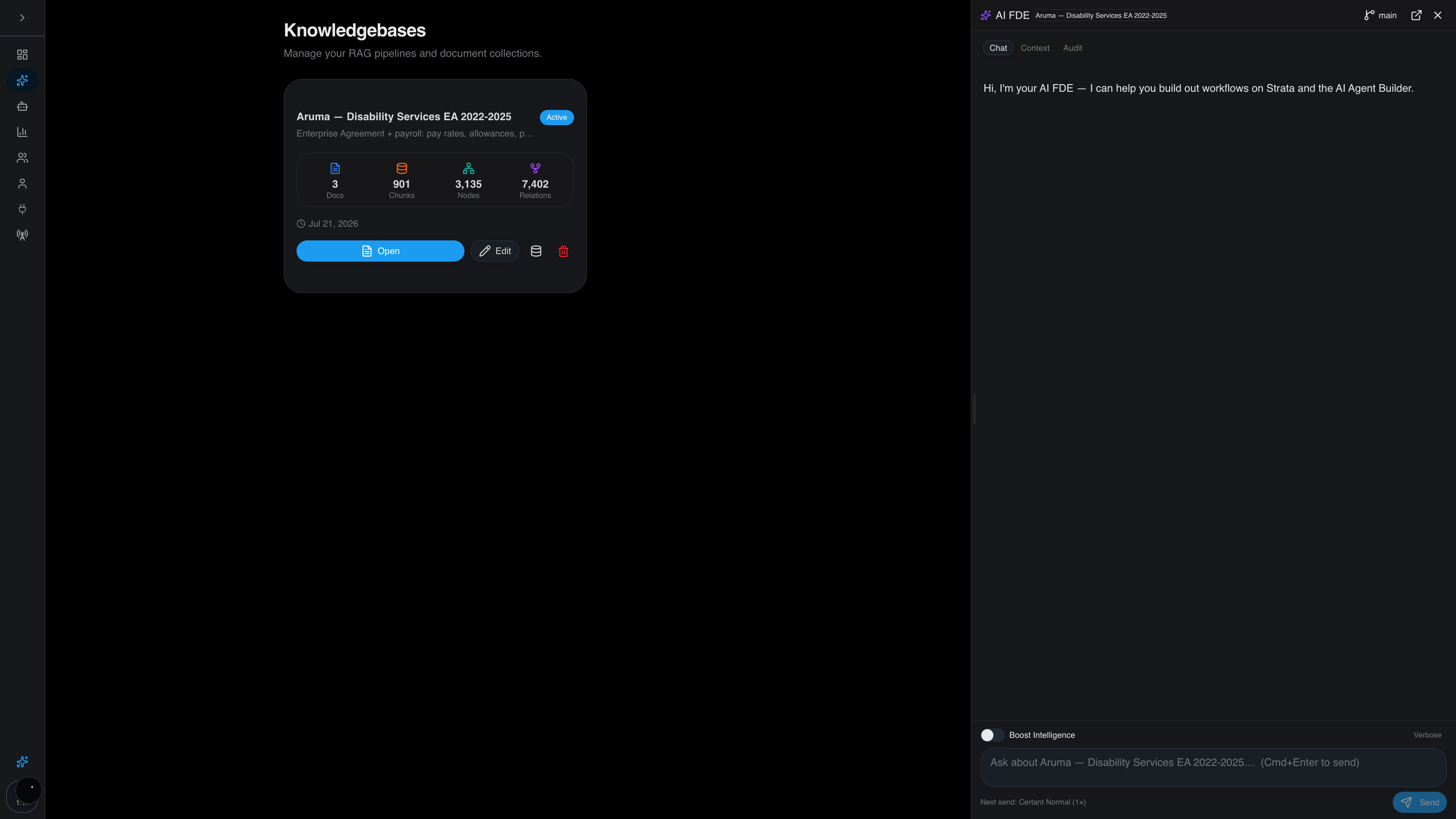
An agent with write access to your ontology
Our AI FDE can edit a live data model. The gate around it: a short-lived key scoped to you, three server-enforced tiers, and a signed exposure register.
Read the post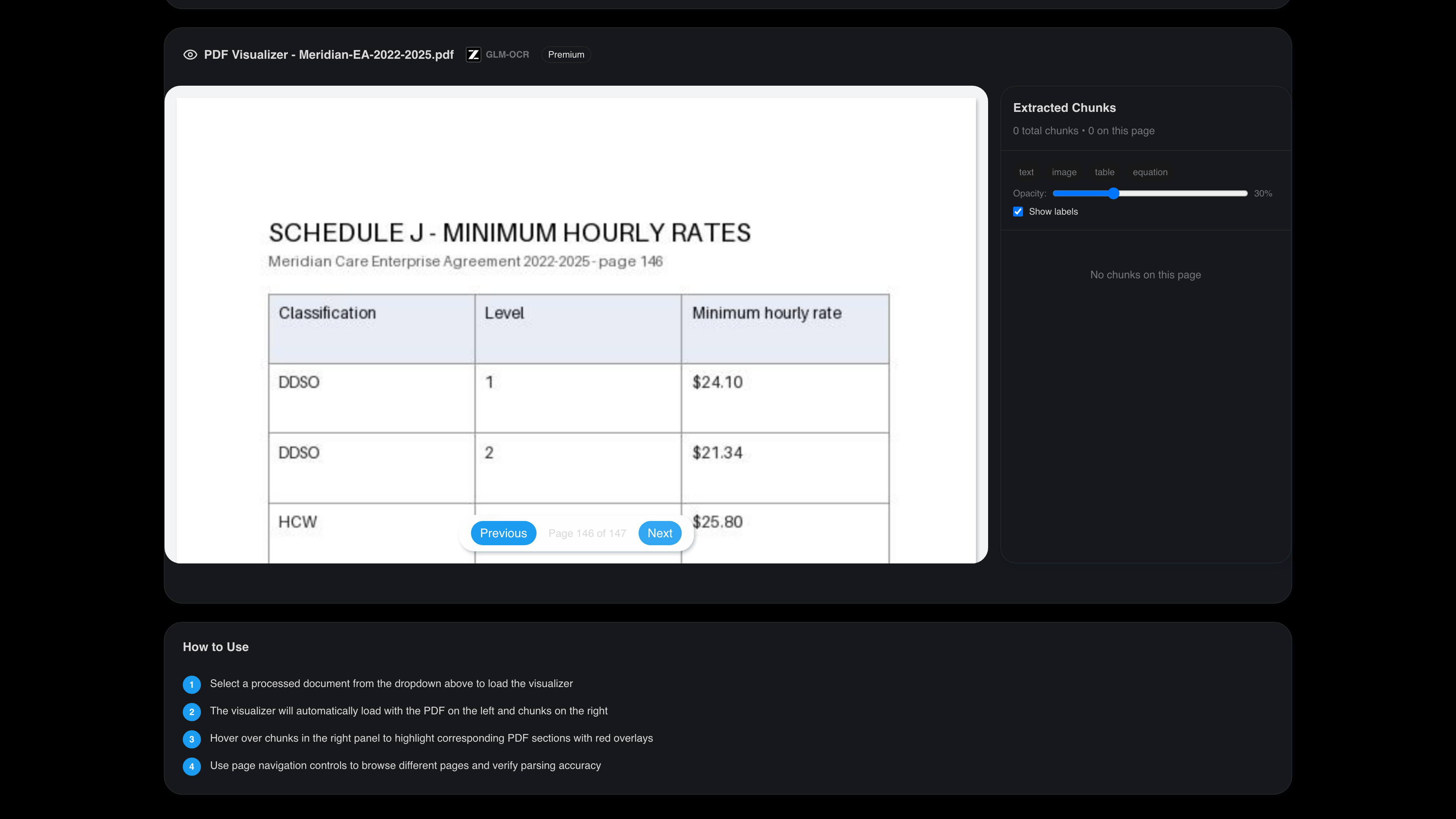
Page 146: the number nobody was going to find
Two people paid below a legal minimum buried in a 147-page agreement, found and proved from the page, then fixed with a human signature.
Read the post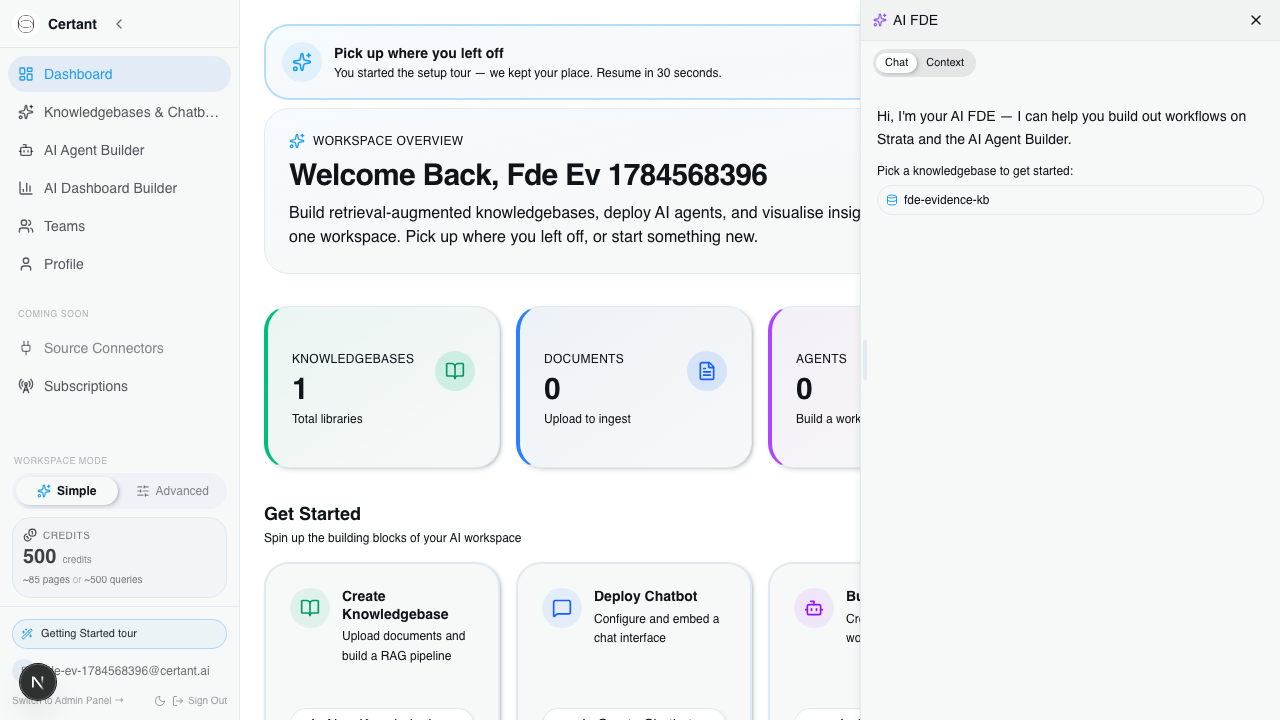
An engineer in a drawer: 274 seconds to a working ontology
Palantir sends a forward deployed engineer. We ship one in a drawer: 21 July 2026, it built a working ontology for 1.5 credits, failed three of five tasks.
Read the post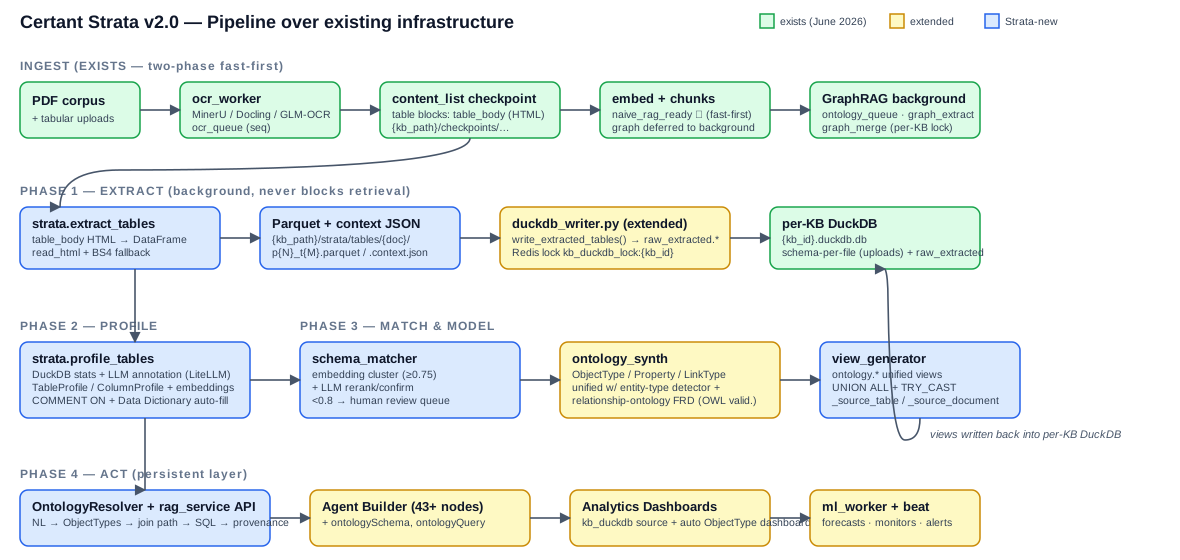
Building a data model from PDFs instead of designing one
Certant Strata turns the tables inside a PDF corpus into a versioned data model. How the pipeline works, and the four ways it broke at corpus scale.
Read the post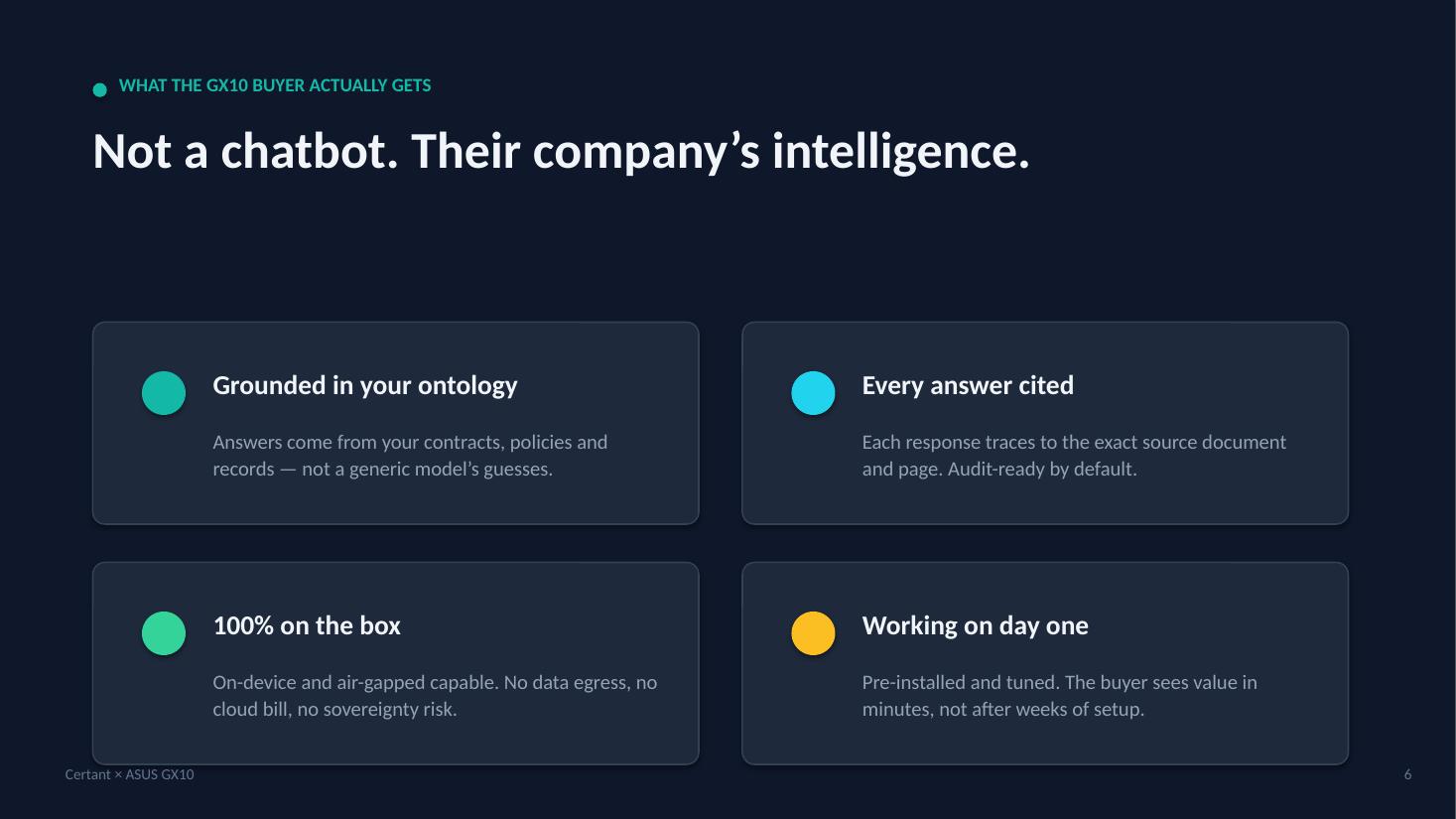
What air-gapped actually means: every phone-home in the stack, audited
Ten outbound-call vectors in our own stack, the two that needed code, and the tcpdump proof that a locked-down box still answers.
Read the post
Overdue update: The launch of MindLattice
An overview of MindLattice, a platform addressing data engineering challenges in AI transformation and serving underserved industries.
Read the postInformational
Practical background and business guidance for teams exploring AI.

AI Risk Management: A 2026 Guide
Master AI risk management in 2026. Learn frameworks, assessment methods, tools, and best practices for regulated industries. Start free with Certant.
Read the post
How to Unify Fragmented Enterprise Data
Unify fragmented enterprise data across systems into a single knowledge base.
Read the post
How to Build Chatbots Easily: A 2026 Guide
Learn how to build chatbots easily in 2026. From no-code platforms to training on your own data, this guide covers tools, steps and real business examples.
Read the post
Unified Knowledge Base for HR Policies: 2026 Guide
Build a unified knowledge base for HR policies that gives staff instant, verifiable answers.
Read the post
Benefits of Traceable AI in Finance: A 2026 Guide
Traceable AI gives finance teams verifiable answers, faster audits and safer credit decisions. Here is what it changes in practice.
Read the post
Progress vs Seekr for Data Integration: 2026 Comparison
Progress vs Seekr for data integration compared: pipelines, AI-ready data, governance and knowledge graphs for regulated firms. See which fits your stack.
Read the post
Enterprise Knowledge Management Platform Deployment Guide
A practical deployment guide for enterprise knowledge management. Plan, migrate, govern and measure your platform rollout with confidence.
Read the post
Traceable AI in Regulated Sectors: Why It Matters
Traceable AI regulated sectors: Traceable AI in regulated sectors reduces compliance risk and builds auditor confidence.
Read the post
Reducing Manual Data Processing in Healthcare
Reducing manual data processing in healthcare cuts errors, frees clinical time and improves data quality.
Read the post
Glean vs Stardog for Knowledge Management in 2026
Glean vs Stardog for knowledge management: compare search, graphs and governance, plus a regulated-industry alternative with verifiable answers.
Read the post
How to Audit AI Generated Answers: A 2026 Guide
Learn how to audit AI generated answers with a repeatable process for source verification, accuracy checks, and audit trails that satisfy regulators.
Read the post
How to Audit AI Knowledge Graphs: A Step-by-Step Guide
Learn how to audit AI knowledge graphs effectively. Step-by-step process to verify accuracy, identify gaps, and ensure reliable answers in your system.
Read the post
Best Glean Alternatives for Enterprise Knowledge in 2026
Compare the best Glean alternatives for enterprise knowledge in 2026, from open-source search to verifiable knowledge graphs for regulated industries.
Read the post
Implementing Sovereign AI for Government Agencies
A step-by-step guide to implementing sovereign AI for government agencies, covering data residency, governance, transparency and air-gapped deployment.
Read the post
How to Test Document AI Before Trusting Answers
A practical method for evaluating document AI with traceable citations, refusal tests, human review and inspectable calculations.
Read the post
Get Pricing for Automated Workflow Tools: 2026 Review
Compare automated workflow tool pricing, uncover hidden costs, and calculate ROI before you buy. Get pricing for automated workflow tools with confidence.
Read the post
How to Verify AI Answers in Compliance: A 2026 Guide
Learn how to verify AI answers in compliance with source citations, audit trails and human review. A practical 2026 guide for regulated teams. Start now.
Read the post
Glean vs Stardog: Knowledge Graph Comparison 2026
Glean vs Stardog knowledge graph comparison for 2026: see how each platform handles semantic modelling, governance and regulated-sector needs before you.
Read the post
Book a Demo for Knowledge Graph Software: 2026 Review
Book a demo for knowledge graph software with confidence. Compare platforms, see what to ask, and learn where knowledge graph RAG fits. Start your free.
Read the post
Preventing AI Hallucinations in Regulated Industries
Preventing AI hallucinations: Discover how regulated industries prevent AI hallucinations. Learn grounding techniques, risk frameworks, and verification.
Read the post
Enterprise AI Implementation Cost and Timeline Guide
Enterprise AI implementation cost and timeline explained: what drives budgets, how long rollouts take, and what regulated teams should plan for. Start.
Read the post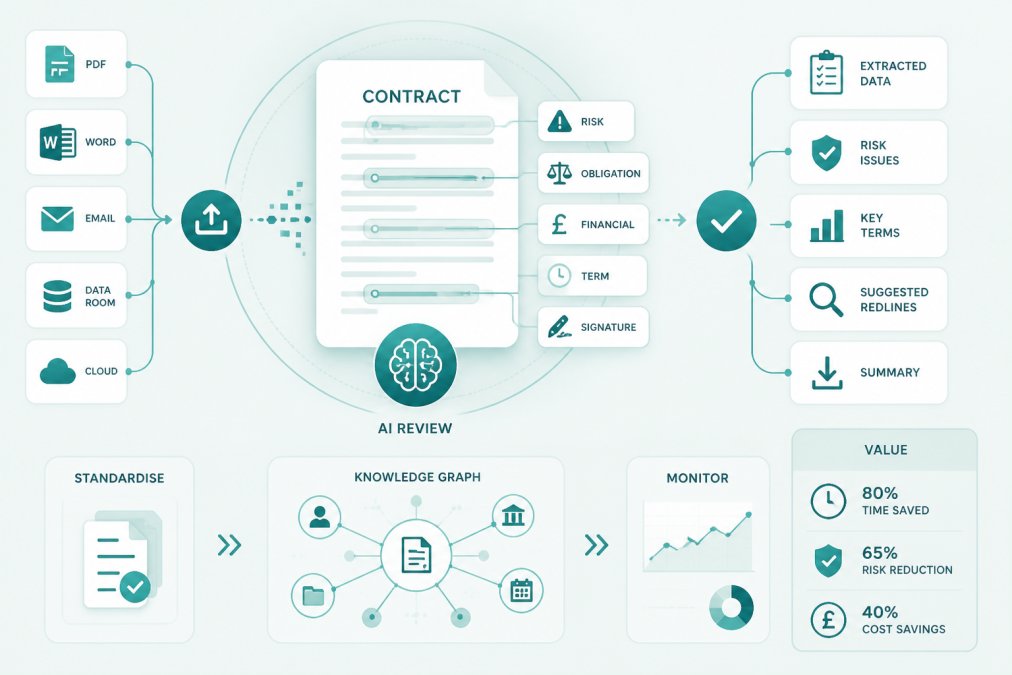
Automating Contract Review for Financial Services in 2026
How automating contract review for financial services cuts manual hours, flags risk and keeps auditors happy. Explore tools, workflows and best practice.
Read the post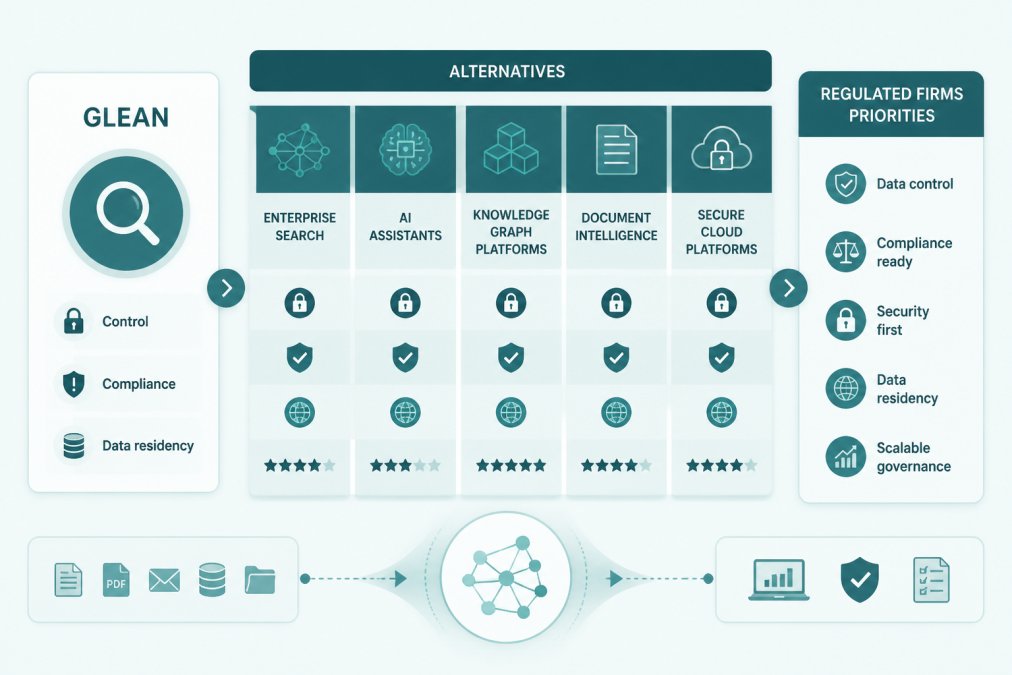
Best Glean Alternatives for Regulated Firms in 2026
Compare the best Glean alternatives for regulated firms in 2026, from data governance in AI search tools to compliance-ready knowledge base software.
Read the post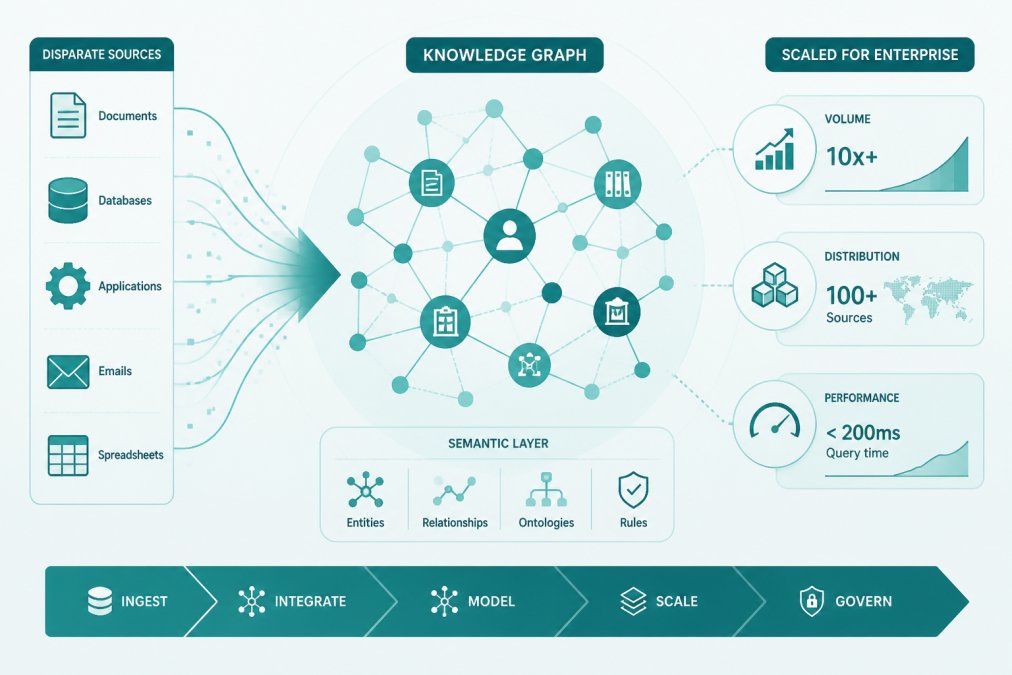
Scaling Knowledge Graphs for Enterprise Teams in 2026
Scaling knowledge graphs for enterprise teams: governance, team structure, knowledge graph RAG and implementation best practices. Explore the 2026.
Read the post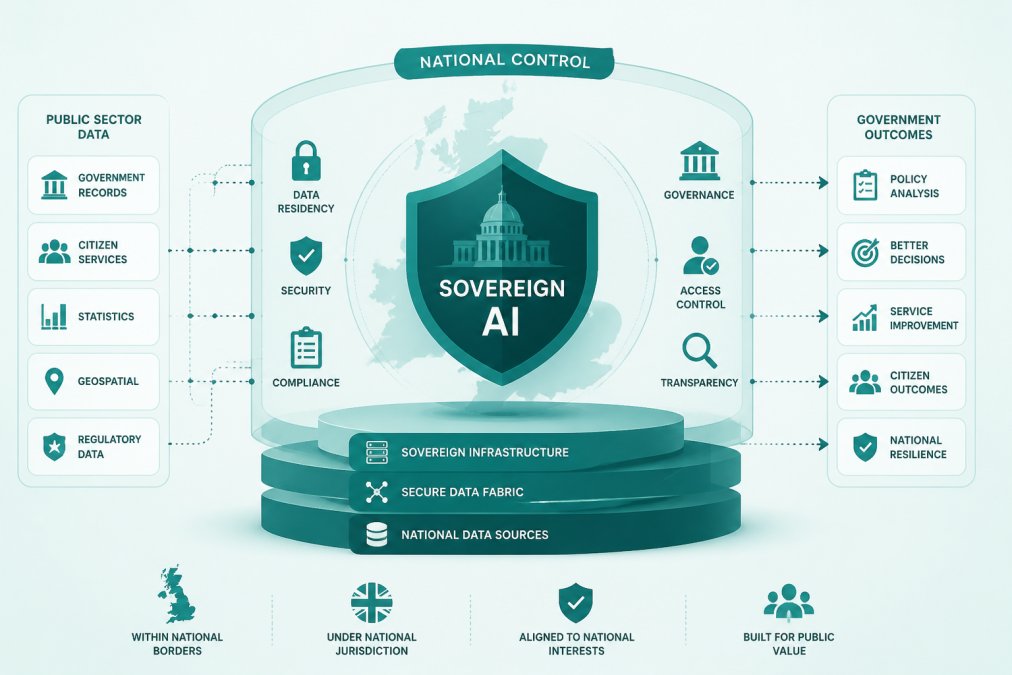
Deploying Sovereign AI for Government Policy: 2026 Guide
Learn how deploying sovereign AI for government policy keeps data resident, meets frameworks, and supports air-gapped deployment. Start your sovereign AI.
Read the post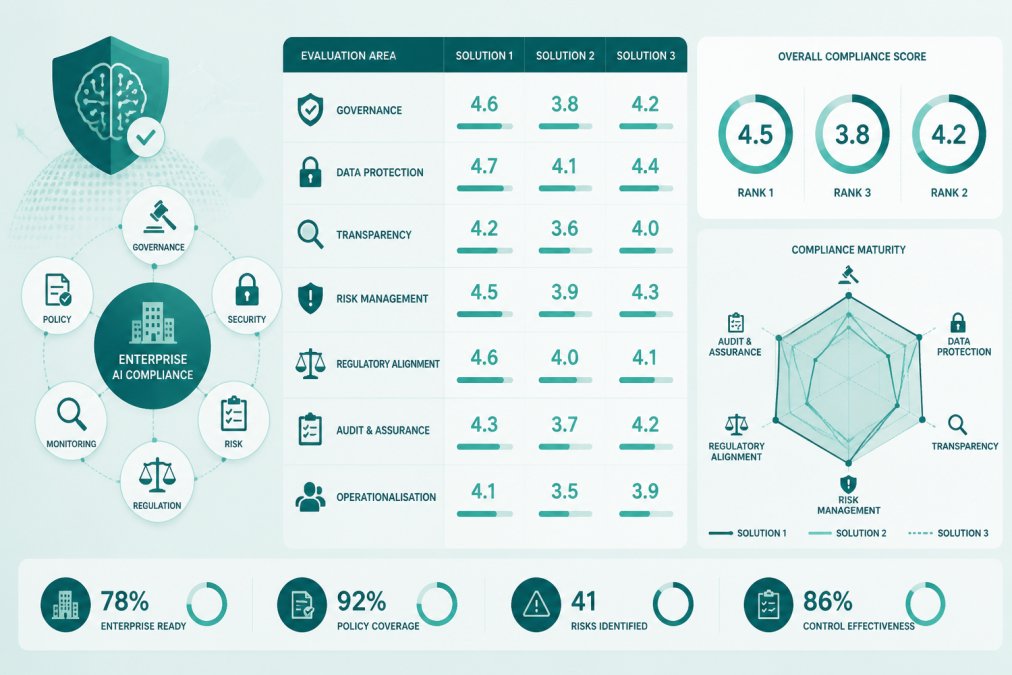
Buy Enterprise AI Compliance Solution: 2026 Buyer's Guide
Ready to buy enterprise AI compliance solution? Compare features, frameworks, pricing models and deployment options before you commit. Start your free.
Read the post
Automated Policy Compliance for Large Enterprises
Learn how automated policy compliance helps large enterprises reduce risk and save time. Explore best practices, examples, and a clear implementation.
Read the post
Scaling Internal Knowledge Bases for Mid-Sized Firms
Scaling internal knowledge bases for mid-sized firms requires structure, not just software. Learn best practices, productivity gains, and software.
Read the postGet new posts by email.
Occasional writing on AI, data engineering and what we're building. No marketing fluff.