Book a Demo for Knowledge Graph Software: 2026 Review
Book a demo for knowledge graph software with confidence. Compare platforms, see what to ask, and learn where knowledge graph RAG fits. Start your free.
Table of Contents
- What Booking a Knowledge Graph Software Demo Actually Gets You
- Knowledge Graph Software Comparison: The Platforms Worth a Demo Slot
- Graph Databases: Neo4j, Amazon Neptune, FalkorDB and Ontotext GraphDB
- Governance and Metadata Platforms: OvalEdge and Atlan
- Specialist Builders: Fluree and Improvado
- Where Knowledge Graph RAG Changes the Demo Conversation
- What to Ask in a Demo, by Role and Industry
- Verdict: Which Platform Earns Your Demo Slot
- Frequently Asked Questions
Last Updated: September 22, 2026
What Booking a Knowledge Graph Software Demo Actually Gets You
A demo for knowledge graph software is a working session, not a sales pitch, and the difference shows up in what you walk away with: a mapped answer to one of your own messy data questions, with the source trail visible. At Certant, we run these sessions around live documents rather than sample datasets, because that is the only way to tell whether a platform can handle your SharePoint sprawl, your legacy case files, and your auditors' questions at the same time. Below, we break down nine platforms worth a demo slot in 2026, what each one does well, and the questions that separate a real capability from a rehearsed script.
Here is the uncomfortable part most buying guides skip: the demo is where vendors control the narrative. They choose the dataset, the question, and the pace. If you let that happen, every platform looks capable.
The single most useful thing you can do before booking anything is to bring one genuinely difficult document set of your own. A contract with three amendments. A policy that contradicts an older version. A file that lives in a system nobody wants to touch.
Platforms that can reason across that material in front of you are worth a second meeting. Platforms that pivot to a canned demo are not.
This review covers a comparison of nine platforms across three categories: graph databases, governance and metadata tools, and specialist builders. Each section explains who the platform genuinely suits, where it falls short, and what to probe when you get your slot.

Knowledge Graph Software Comparison: The Platforms Worth a Demo Slot
Knowledge graph software is a platform that stores data as entities and the relationships between them, so a system can answer questions by following connections rather than scanning rows. The category splits into three practical groups: graph databases that hold the structure, governance platforms that map where data lives, and specialist builders that apply graphs to a specific job.
That split matters more than any feature list. A graph database will not govern your metadata. A governance tool will not serve a low-latency query to an AI agent. Buying the wrong category is the most expensive mistake in this market, and it usually happens because the demo looked impressive.
| Platform | Category | Free Tier | Best For | Watch Out For |
|---|---|---|---|---|
| Certant | Applied knowledge graph | Yes | Regulated firms needing verifiable answers | Built for document-heavy workflows, not raw graph benchmarking |
| Neo4j | Graph database | Yes | Large-scale graph traversal | Steep learning curve without graph theory |
| Amazon Neptune | Graph database | No | Teams already on AWS | Vendor lock-in to the AWS ecosystem |
| FalkorDB | Graph database | Yes | Real-time GraphRAG workloads | Smaller ecosystem than established players |
| Ontotext GraphDB | Graph database | Yes | Semantic reasoning projects | Complex to tune without semantic expertise |
| OvalEdge | Governance and metadata | No | Data governance and cataloguing | Less focused on raw graph performance |
| Atlan | Governance and metadata | No | Data team collaboration | A metadata tool, not a graph database |
| Fluree | Specialist builder | Yes | Auditable, tamper-proof data | Niche compared to general-purpose databases |
| Improvado | Specialist builder | No | Marketing data unification | Limited use outside marketing analytics |
How We Evaluated Each Platform
We scored each platform against five criteria that actually decide a purchase: how quickly it produces a verifiable answer, how much implementation effort it demands, how well it handles your existing document estate, whether it supports sovereign or on-premises deployment, and how transparent the source trail is. Performance benchmarks matter less than most buyers assume, because very few organisations hit the ceiling of a modern graph engine. The bottleneck is almost always ingestion and governance, not query speed.
Graph Databases: Neo4j, Amazon Neptune, FalkorDB and Ontotext GraphDB
Graph databases are the foundation layer, and they are the easiest category to over-buy. Neo4j remains the reference point: native graph storage, the Cypher query language, and a mature analytics library. Its ecosystem is genuinely unmatched. The cost is a real learning curve for teams without graph experience, and that curve shows up in your first month, not your first demo.
Amazon Neptune trades flexibility for convenience. If your infrastructure already sits on AWS, Neptune removes almost all operational overhead, with automated backups, read replicas, and tight integration with services like S3 and Lambda. The trade-off is lock-in. Moving off Neptune later is a project, not a migration.
FalkorDB targets a different problem entirely: low-latency traversal for GraphRAG and agent workloads. If your use case involves an AI assistant answering questions in real time, query latency becomes the constraint that matters, and FalkorDB is built around it. The ecosystem is smaller, so expect to do more of your own integration work.
Ontotext GraphDB leads on semantic reasoning. Full W3C standards support, inference, and text mining integration make it the strongest option for research-heavy or standards-driven work. It is also the hardest to tune without in-house semantic expertise, which is a staffing question as much as a technical one.
Governance and Metadata Platforms: OvalEdge and Atlan
Governance platforms solve a different problem: knowing what data you have and where it came from. OvalEdge builds an Enterprise Context Graph that connects metadata to business meaning, with automated discovery, lineage, and role-based access control. It is aimed squarely at organisations that need to answer "where did this number come from" without a week of manual tracing.
Build a brain for your company →
Atlan takes a similar idea and wraps it in a noticeably better interface. Its Enterprise Data Graph maps relationships across modern data stacks, with strong integrations for Snowflake and Databricks, and the time-to-value for cataloguing is fast. Data teams tend to like it immediately.
The honest limitation for both: neither is a graph database. If your goal is to serve a low-latency query to an AI agent, these tools will not do it. They tell you where your data lives and how it connects. They do not power the reasoning layer itself.
What most buyers miss is that governance and graph capability are complementary purchases, not competing ones. A regulated firm often needs both, and the demo should establish which problem is actually blocking progress.
Specialist Builders: Fluree and Improvado
Fluree is the most distinctive platform in this comparison. It is a semantic graph database with a blockchain-backed ledger, which means every change is immutable and auditable. For use cases where the integrity of the record is the point, such as regulatory filings or provenance tracking, that property is difficult to replicate any other way. It is developer-friendly and API-first. It is also a niche choice, and you should be comfortable with that.
Improvado applies graph thinking to a narrow domain: marketing analytics. It extracts data from a large number of marketing platforms, normalises it, and builds a knowledge graph for cross-channel insight. For marketing teams drowning in disconnected dashboards, it removes a lot of manual preparation. Outside marketing, it has little to offer.
Neither platform tries to be everything. That focus is a strength in the right organisation and a dead end in the wrong one.
Where Knowledge Graph RAG Changes the Demo Conversation
Knowledge graph RAG is the practice of grounding a language model's answers in a graph of connected entities rather than a flat pile of text chunks. It changes what you should be testing in a demo, because retrieval quality becomes the whole ballgame.
Flat retrieval finds passages that look similar to the question. Graph retrieval follows relationships, so it can connect a clause in one contract to a definition in another document and an obligation in a policy. For document-heavy work in regulated industries, that difference is the difference between a useful answer and a confident wrong one.
This is where the demo script usually falls apart. A vendor can show you a clean question against a clean dataset and the answer will look excellent. Ask instead for a question that requires joining three documents, and watch how the platform handles a missing link.
Look for three things. First, does the answer cite the specific source paragraph, or just the document? Second, when the graph has no path to an answer, does the system say so or invent one? Third, can you see the reasoning path, or only the output?
A platform that fails the third question is a black box, and a black box is a problem when your auditors arrive. Certant's approach is to build the graph from your internal documents and return answers with citations back to the source paragraph, which is the property that makes a knowledge graph RAG deployment defensible rather than merely impressive.
What to Ask in a Demo, by Role and Industry
The questions that matter depend on who you are and what you answer for. Use this as a working checklist, and bring it to every session.
For compliance officers at financial services firms:
- Can the system show the exact source paragraph behind every answer?
- How does it flag risk in an incoming contract, and can I tune the flags?
- What happens when two documents contradict each other?
- Can I export an audit trail of how an answer was produced?
For operations directors in healthcare:
Build a brain for your company →
- How much implementation effort is required before we see benefit?
- Can it ingest our existing document formats without a conversion project?
- Who maintains the system once it is live?
- How are access permissions enforced across departments?
For knowledge management leads in large enterprises:
- How does the platform handle duplicate and near-duplicate documents?
- What is the process for keeping the graph current as documents change?
- Can business users curate the graph without engineering support?
For IT directors in government:
- Does the platform support air-gapped or on-premise deployment?
- Which model providers can it run against, including local GPUs?
- Where does our data physically reside, and who can access it?
For HR managers:
- How quickly can employees get a verifiable answer to a policy question?
- Can the system handle policy versions and effective dates?
Verdict: Which Platform Earns Your Demo Slot
Most organisations should book two demos, not five. Pick one platform from the category that matches your actual bottleneck, and pick one applied platform that can demonstrate an end-to-end answer against your own material. Comparing a graph database against a governance tool is a category error, and it wastes the time of everyone in the room.
If your problem is serving verifiable answers to staff and customers in a regulated environment, the applied platforms deserve the first slot. Certant builds a live knowledge graph from your internal documents and data, returns answers with citations to source paragraphs, and supports sovereign, air-gap-capable, and on-premises deployment. It runs against AWS Bedrock, Azure AI, GCP Vertex, or local GPUs, and the implementation process is designed to be low-risk with no install required. There is a free tier, so you can test the ingestion path before committing budget, and pricing is published on the Certant pricing page.
If your problem is raw graph infrastructure, start with Neo4j or Neptune depending on where your infrastructure already lives. If your problem is knowing what data you hold, start with Atlan or OvalEdge.
Book the demo that matches the problem. Bring your worst documents. Ask for the source.
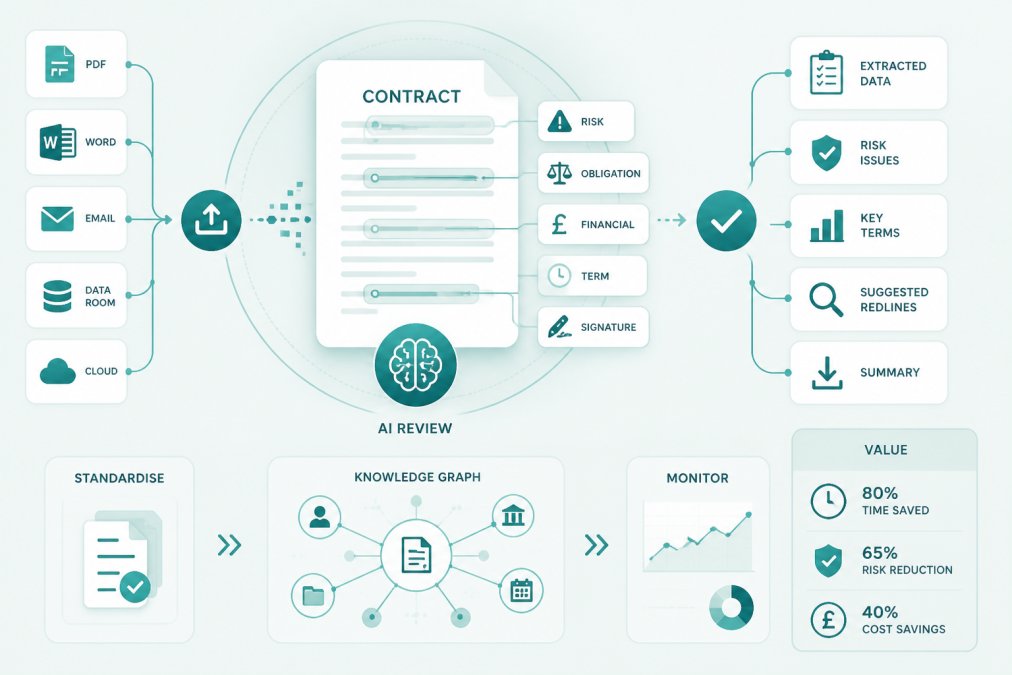
The challenge with any knowledge graph project is not choosing a platform, it is proving the answers are trustworthy before you commit. Certant was built for exactly that problem: it transforms fragmented documents into a live knowledge graph, returns verifiable answers with citations to source paragraphs, and supports sovereign, air-gap-capable, and on-premise deployment for regulated teams. You can start on the free tier and test it against your own material before booking a full demo. Get started with Certant and see what your documents can actually answer.
Frequently Asked Questions
What should I ask during a knowledge graph software demo?
Ask for the same question answered three times with different phrasing to test consistency, then ask to see the source paragraph behind each answer. Request a live ingestion of one of your own messy documents rather than a clean sample dataset. Finally, ask who maintains the graph after go-live and what happens when a source document changes. The answers separate a genuine knowledge graph software platform from a search layer with a graph label.
How long does a typical knowledge graph software demo take?
Most run 30 to 45 minutes, with the first ten spent on your use case rather than slides. Ask for a working session instead of a presentation: bring two or three real documents, including one poorly scanned or inconsistently formatted file, and have the vendor ingest them live. A platform that needs a week of preparation before it can answer anything about your own content is telling you something about implementation effort.
Do I need a technical background to evaluate knowledge graph software?
No, and the strongest demos are run by the people who will use the system daily. A compliance officer should ask how a risk flag traces back to a contract clause. An HR manager should ask whether a policy answer cites the current version of the policy. Save the deeper questions about query languages, deployment models and integration for your IT colleagues, who can join a second session once the business case is clear.
How does knowledge graph RAG reduce hallucination compared with standard retrieval?
Standard retrieval pulls text chunks that look similar to the question, which is why answers often sound confident but cite the wrong clause. Knowledge graph RAG retrieves through defined relationships, so an answer about a contract obligation follows the link between that obligation, the clause and the governing policy. Because each hop is explicit, the platform can show the source paragraph behind the answer, which is what auditors and regulators ask for.
What are the key features to look for in enterprise knowledge graph tools?
Prioritise verifiable citations to source paragraphs, deployment options that match your regulatory obligations, connectors for the systems you already run, and a clear answer on who maintains the graph. For regulated firms, air-gapped or on-premisesss deployment and alignment with frameworks such as IRAP, CPS 230 and APP 8 matter more than query speed. Ask each vendor to demonstrate the citation trail before you discuss anything else.
Frequently asked questions
What should I ask during a knowledge graph software demo?
Ask for the same question answered three times with different phrasing to test consistency, then ask to see the source paragraph behind each answer. Request a live ingestion of one of your own messy documents rather than a clean sample dataset. Finally, ask who maintains the graph after go-live and what happens when a source document changes. The answers separate a genuine knowledge graph software platform from a search layer with a graph label.
How long does a typical knowledge graph software demo take?
Most run 30 to 45 minutes, with the first ten spent on your use case rather than slides. Ask for a working session instead of a presentation: bring two or three real documents, including one poorly scanned or inconsistently formatted file, and have the vendor ingest them live. A platform that needs a week of preparation before it can answer anything about your own content is telling you something about implementation effort.
Do I need a technical background to evaluate knowledge graph software?
No, and the strongest demos are run by the people who will use the system daily. A compliance officer should ask how a risk flag traces back to a contract clause. An HR manager should ask whether a policy answer cites the current version of the policy. Save the deeper questions about query languages, deployment models and integration for your IT colleagues, who can join a second session once the business case is clear.
How does knowledge graph RAG reduce hallucination compared with standard retrieval?
Standard retrieval pulls text chunks that look similar to the question, which is why answers often sound confident but cite the wrong clause. Knowledge graph RAG retrieves through defined relationships, so an answer about a contract obligation follows the link between that obligation, the clause and the governing policy. Because each hop is explicit, the platform can show the source paragraph behind the answer, which is what auditors and regulators ask for.
What are the key features to look for in enterprise knowledge graph tools?
Prioritise verifiable citations to source paragraphs, deployment options that match your regulatory obligations, connectors for the systems you already run, and a clear answer on who maintains the graph. For regulated firms, air-gapped or on-premisesss deployment and alignment with frameworks such as IRAP, CPS 230 and APP 8 matter more than query speed. Ask each vendor to demonstrate the citation trail before you discuss anything else.