Preventing AI Hallucinations in Regulated Industries
Preventing AI hallucinations: Discover how regulated industries prevent AI hallucinations. Learn grounding techniques, risk frameworks, and verification.
Table of Contents
- Why AI Hallucinations Matter in Regulated Industries
- The Cost of Unverified AI Outputs
- Building an AI Risk Management Framework
- Grounding AI in Verified Data Sources
- LLM Hallucination Mitigation Strategies That Work
- Traceability: Showing Your Auditors the Work
- Preventing Hallucinations Through Knowledge Graph Architecture
- Practical Implementation Roadmap
- Frequently Asked Questions
Last Updated: 19 September 2026
Why AI Hallucinations Matter in Regulated Industries
Preventing AI hallucinations in regulated industries isn't optional. It's survival.
When a compliance officer asks an AI system about a contract clause and gets a confident but fabricated answer, the cost isn't just embarrassment. It's regulatory fines, audit failures, and legal exposure. Financial services firms face this daily. Healthcare organisations do too. So do government agencies managing policy interpretation.
The problem is simple: large language models don't distinguish between what they know and what they've invented. They generate plausible-sounding text. Sometimes it's accurate. Sometimes it's entirely made up. In regulated environments, "sometimes" isn't acceptable.
This guide from Certant covers how to build systems that catch hallucinations before they reach your team. We'll walk through verification frameworks, data grounding techniques, and the specific strategies that actually work when auditors ask how you arrived at a decision.
The Cost of Unverified AI Outputs
An AI system that hallucinates isn't just wrong. It's confident about being wrong.
Your finance team asks: "What's the payment term in the Johnson contract?" The system responds: "Net 45 days." You act on it. The actual contract says Net 30. By the time you discover the error, you've already processed invoices incorrectly.
Multiply this across dozens of decisions per week. Contract reviews, policy lookups, compliance checks. Each one carries risk.
The real damage compounds:
- Auditors lose confidence in your controls
- Teams stop trusting the AI system and go back to manual processes
- You've invested in automation that nobody uses
- Regulatory bodies flag your documentation as unreliable
Regulated industries can't afford the trial-and-error approach that works elsewhere. One hallucination in a healthcare record or financial disclosure can trigger investigations. One misread compliance requirement can cost your organisation hundreds of thousands in remediation.
The solution isn't to avoid AI. It's to make sure every answer comes with proof.
Building an AI Risk Management Framework
An AI risk management framework does one thing: it makes hallucinations visible before they cause damage.
Start by defining what "verified" means for your business. A healthcare organisation might require that every clinical recommendation links to source documents. A financial services firm might need contract interpretations traced to specific clauses. A government agency might demand that policy answers cite the actual regulation.
Your framework has three layers:
Define what needs verification. Not everything does. A brainstorming session can tolerate speculation. A compliance decision cannot. Map your workflows and flag which ones require proof.
Build verification into the system. This means choosing AI architectures that support traceability from the start. Retrieval-Augmented Generation (RAG) pulls answers from your actual documents instead of generating them from general training data. It's slower than raw generation, but it's verifiable.
Test before deployment. Run your system against known cases. If it hallucinates on your test set, it will hallucinate on live data.
Define Your Verification Requirements
Start here: what does your audit team actually need?
Most organisations discover they need different verification levels for different tasks. A policy lookup needs full traceability. A summary of multiple documents might need source references but not word-for-word quotes. A brainstorm session needs none.
Write this down. Be specific. "Verifiable" is too vague. "Every answer must cite the source paragraph and include the document name, date, and section number" is clear.
Then test your requirements against your actual workflows. Can your compliance team explain to an auditor how the system arrived at each answer? If the answer is "probably," your requirements aren't specific enough.
Establish Audit Trails and Traceability
Auditors will ask: "How did the system reach this conclusion?"
Your answer can't be "it's what the AI generated." You need a trail. Document name. Source section. Confidence score. Timestamp. The reasoning steps the system took.
This is where most AI implementations fail. They optimise for speed and accuracy. They don't optimise for proof.
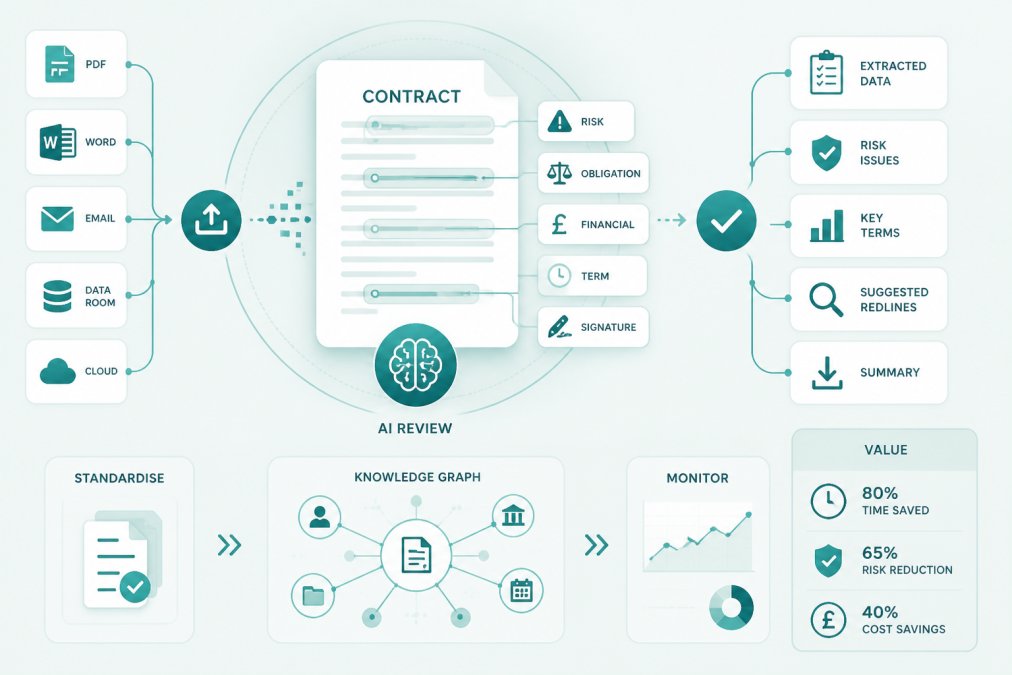
Certant's approach builds traceability into the architecture. Every answer includes citations to source paragraphs. Your team can click through and verify the answer against the original document. Auditors see exactly what the system read and how it interpreted it.
Set this up from day one. Retrofitting traceability is expensive. Building it in is straightforward.
Grounding AI in Verified Data Sources
Hallucinations happen when AI systems generate answers based on patterns in training data rather than your actual documents.
The fix is grounding: anchoring the AI system to your real data.
Instead of asking "What does the contract say?" and hoping the model remembers contract language from its training data, you ask "What does this contract say?" and feed it the actual document. The system reads your real data and pulls answers from it.
This is the difference between an AI system that might hallucinate and one that can't.
Grounding works because it removes the temptation to generate. The system has your documents in front of it. It finds the answer or it doesn't. If it doesn't, it says so.
The trade-off: grounded systems are slower. They need to search your data, rank results, and construct answers from what they find. A raw language model answers instantly. A grounded system takes a few seconds. For compliance work, the extra seconds are worth it.
LLM Hallucination Mitigation Strategies That Work
Preventing AI hallucinations requires multiple approaches layered together. No single technique solves the problem.
Retrieval-Augmented Generation (RAG)
RAG is the most effective single technique for preventing hallucinations in regulated work.
Here's how it works: instead of asking the AI model to generate an answer from memory, you give it your actual documents first. The system searches your data, finds relevant sections, and builds an answer from what it found.
The result: the AI can't hallucinate about information it doesn't have access to.
RAG requires that your documents are searchable and well-organised. If your contracts are scattered across three systems and a filing cabinet, RAG can't help until you consolidate them. The investment in data organisation pays off immediately.
RAG works best when:
- Your documents are structured (contracts, policies, procedures)
- You have clear search terms (specific clause names, policy sections)
- You need high accuracy over speed
- Auditors will ask for source citations Maintaining such rigorous standards for source attribution requires that these technical frameworks remain tightly integrated with robust AI moderation policies to ensure that generated outputs consistently align with institutional compliance requirements.
Source Citation and Evidence Linking
Every answer needs to show its work.
When your system answers a question, it should include:
- Which document the answer came from
- Which section or paragraph
- The specific text that supports the answer
- A confidence score if relevant
This does two things. First, it lets your team verify the answer immediately. Second, it gives auditors exactly what they need to validate your controls.
Citation linking is straightforward to implement. The system stores references as it builds answers. When it returns a result, it includes the citations.
The benefit compounds over time. Your team learns which sources are reliable. You spot patterns in where hallucinations occur. You improve your verification process.
Confidence Scoring and Rejection Thresholds
Not every answer deserves equal confidence.
A system that's 95% sure about a contract clause should sound different from one that's 60% sure. Most AI systems don't distinguish. They sound equally confident either way.
Confidence scoring lets you reject low-confidence answers before they reach your team.
Set your threshold based on your risk tolerance. For contract review, you might reject anything below 85% confidence. For policy lookups, 75% might be acceptable. For brainstorming, you might accept anything above 50%.
The threshold isn't magic. It's a guardrail. It catches the most obvious hallucinations and sends them back for human review.
Traceability: Showing Your Auditors the Work
Auditors don't care how clever your AI system is. They care about proof.
Can you show them exactly how the system arrived at each decision? Can you pull up the source documents? Can you explain why the system chose one answer over another?

If you can't, your system isn't ready for regulated work.
Traceability means every decision leaves a record. The documents the system consulted. The sections it quoted. The reasoning steps it followed. The confidence score. The timestamp.
This record becomes your evidence. When an auditor asks "How did you approve this contract?" you don't say "the AI approved it." You say "the system reviewed these three clauses, found no risk flags, and generated a summary. Here's the summary. Here are the source clauses. Here's the system's reasoning."
Build traceability into your workflow from the start. Make it the default, not an afterthought.
Preventing Hallucinations Through Knowledge Graph Architecture
A knowledge graph is how you organise your data so AI systems can't misinterpret it.
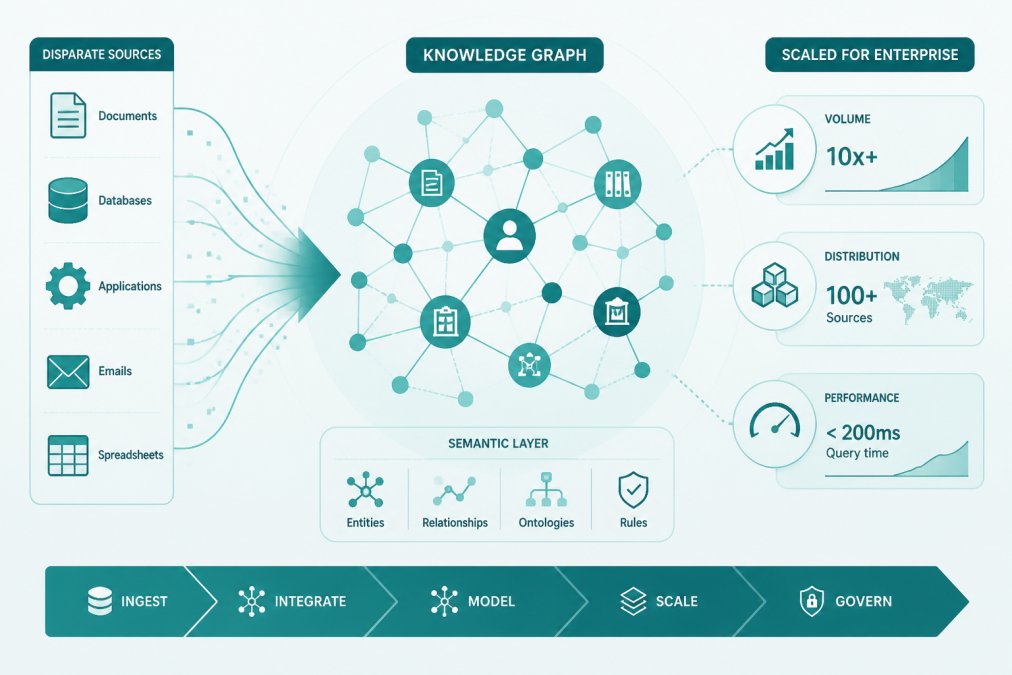
Instead of dumping all your documents into a search engine and hoping the AI finds the right ones, you build a structured representation of your information. Contracts have specific fields: parties, dates, payment terms, obligations. Policies have sections, subsections, and requirements. Procedures have steps and decision points.
A knowledge graph captures this structure. When the AI system needs an answer, it doesn't search raw documents. It navigates the graph, following relationships between concepts. Certant's Automatic Ontology based on your business approach extracts this structure automatically from your documents, so you don't have to map it manually.
The result: fewer hallucinations because the system has clearer information to work with.
Knowledge graphs require upfront investment. You need to extract structure from your documents. You need to define relationships. You need to maintain the graph as your documents change. Automation reduces this burden significantly.
But once built, a knowledge graph becomes your competitive advantage. Your AI systems become more accurate. Your auditors see clear structure. Your team can trust the answers.
Practical Implementation Roadmap
Start small. Pick one workflow where hallucinations would be most costly.
Week 1-2: Define requirements. What does "verified" mean for this workflow? What proof do auditors need? Write it down.
Week 3-4: Consolidate data. Gather all relevant documents into one place. Organise them consistently. Remove duplicates.
Week 5-6: Build initial system. Set up RAG with your documents. Test it against known cases. Measure accuracy.
Week 7-8: Add verification layer. Implement source citation. Add confidence scoring. Set rejection thresholds.
Week 9-10: Audit and refine. Run your system against test cases. Have auditors review the output. Adjust thresholds based on feedback.
Week 11-12: Deploy and monitor. Launch to your team. Track how often the system is used. Monitor for hallucinations. Refine based on real usage.
This timeline assumes you have your data consolidated. If you don't, add 2-4 weeks for data organisation.
The goal isn't perfection. It's reducing hallucinations from common to rare, and catching the ones that slip through before they cause damage.
Certant handles the technical complexity. You define what "verified" means for your business. The platform builds the knowledge graph, implements RAG, adds source citations, and provides the audit trail. Your team uses it with confidence.
Frequently Asked Questions
Why are AI hallucinations a critical risk in regulated industries?
Hallucinations occur when AI systems generate plausible-sounding but factually incorrect information. In regulated industries, this creates direct compliance violations. A financial services firm relying on a hallucinated contract clause could miss a critical obligation. Healthcare organisations might distribute incorrect policy guidance to staff. Regulators expect verifiable, traceable answers. A hallucination that breaches this expectation triggers audit findings, potential fines, and reputational damage. The risk isn't theoretical; it's operational.
How does grounding AI in verified data prevent hallucinations?
Grounding ties AI outputs to specific source documents. Instead of generating an answer from patterns alone, the system retrieves relevant information from your approved data sources, then generates a response based only on what's there. If the source document doesn't contain an answer, the system says so rather than inventing one. This approach eliminates the gap where hallucinations occur. You also get citations showing exactly which document supported each claim, making audits straightforward.
Can LLM hallucination mitigation strategies completely eliminate hallucinations?
No strategy eliminates hallucinations entirely, but robust mitigation reduces them to near-zero in production. Retrieval-augmented generation (RAG), confidence thresholds, and source citation together catch the vast majority. The key is layering controls: verify data sources, set rejection thresholds for low-confidence outputs, require citations, and monitor results. Organisations using these approaches report minimal hallucinations in live systems. The goal is not perfection; it's reducing hallucinations to a level your auditors accept.
How do I show regulators that my AI system is trustworthy?
Regulators want three things: transparency, traceability, and evidence of control. Your system should show the source documents behind each answer, log every query and response, and demonstrate that humans review high-stakes outputs. Document your verification process, your confidence thresholds, and your monitoring approach. When an auditor asks how you arrived at a decision, you should be able to pull up the exact source material, the timestamp, and the reasoning. This evidence-based approach satisfies most regulatory requirements.
Preventing AI hallucinations in regulated industries requires more than hoping the model gets it right. You need architecture that forces verification, processes that demand proof, and auditable records that show your work. Start with one high-risk workflow. Build traceability from day one. Test before you deploy. The organisations that do this well aren't fighting hallucinations. They're eliminating them at the source.
Frequently asked questions
Why are AI hallucinations a critical risk in regulated industries?
Hallucinations occur when AI systems generate plausible-sounding but factually incorrect information. In regulated industries, this creates direct compliance violations. A financial services firm relying on a hallucinated contract clause could miss a critical obligation. Healthcare organisations might distribute incorrect policy guidance to staff. Regulators expect verifiable, traceable answers. A hallucination that breaches this expectation triggers audit findings, potential fines, and reputational damage. The risk isn't theoretical; it's operational.
How does grounding AI in verified data prevent hallucinations?
Grounding ties AI outputs to specific source documents. Instead of generating an answer from patterns alone, the system retrieves relevant information from your approved data sources, then generates a response based only on what's there. If the source document doesn't contain an answer, the system says so rather than inventing one. This approach eliminates the gap where hallucinations occur. You also get citations showing exactly which document supported each claim, making audits straightforward.
Can LLM hallucination mitigation strategies completely eliminate hallucinations?
No strategy eliminates hallucinations entirely, but robust mitigation reduces them to near-zero in production. Retrieval-augmented generation (RAG), confidence thresholds, and source citation together catch the vast majority. The key is layering controls: verify data sources, set rejection thresholds for low-confidence outputs, require citations, and monitor results. Organisations using these approaches report minimal hallucinations in live systems. The goal is not perfection; it's reducing hallucinations to a level your auditors accept.
How do I show regulators that my AI system is trustworthy?
Regulators want three things: transparency, traceability, and evidence of control. Your system should show the source documents behind each answer, log every query and response, and demonstrate that humans review high-stakes outputs. Document your verification process, your confidence thresholds, and your monitoring approach. When an auditor asks how you arrived at a decision, you should be able to pull up the exact source material, the timestamp, and the reasoning. This evidence-based approach satisfies most regulatory requirements.