How to Audit AI Generated Answers: A 2026 Guide
Learn how to audit AI generated answers with a repeatable process for source verification, accuracy checks, and audit trails that satisfy regulators.
Table of Contents
- Why Auditing AI Generated Answers Is Now a Compliance Requirement
- What an AI Answer Audit Actually Tests
- Building Your AI Answer Audit Checklist
- AI Answer Source Verification: Tracing an Answer Back to Its Paragraph
- How to Assess AI-Generated Answer Accuracy Without Reading Everything
- The AI Audit Trail and Documentation Regulators Expect
- Spotting Hallucinations, Bias and Logical Inconsistency
- How Often to Audit AI Generated Answers
- Conclusion: Make the Audit Repeatable, Not Heroic
- Frequently Asked Questions
Last Updated: 5 October 2026
Why Auditing AI Generated Answers Is Now a Compliance Requirement
If you work in a regulated firm and you cannot show how to audit AI generated answers, you have a problem. That is the short version of why knowing how to audit AI generated answers has moved from a nice-to-have to a board-level question. Regulators no longer ask whether you use AI. They ask who checked it.
The pressure is real. Frameworks such as the EU AI Act's transparency obligations now require organisations to keep records of how automated systems produce outputs that affect people. In Australia, APRA's CPS 230 standard pushes operational risk management into the same territory: you must be able to trace, explain and evidence what your systems did.
Certant builds knowledge graphs for exactly this problem. We have watched compliance teams discover that their AI assistant cannot say where an answer came from, and that discovery usually arrives during an audit, not before it.
So here is the throughline for this guide: an audit is not a vibe check. It is a repeatable test with a paper trail.
What an AI Answer Audit Actually Tests
An AI answer audit is a structured review that checks whether an AI system's output is grounded, traceable, and defensible. It tests the answer, the source behind it, and the record you keep.
It is not a spellcheck. Fluency tells you nothing.
Grounding, not fluency
A fluent answer can still be wrong. Grounding means the answer maps to a real document, in your own system, at a specific location. If the AI says a contract auto-renews after 24 months, the audit asks: which clause, in which version, on which page?
The four failure modes worth testing for
Most audits should focus on four things:
- Fabrication - the answer invents a fact, figure or clause
- Misattribution - the answer cites a real document but the wrong part of it
- Staleness - the answer uses a superseded policy or old contract version
- Scope drift - the answer pulls from a source it was never meant to use
Each failure mode needs its own test. A single "does it look right" review catches none of them reliably.
Building Your AI Answer Audit Checklist
The most useful AI answer audit checklist is short enough that people actually run it. Ours has five steps, and each one produces evidence you can file.
- Define the question set. Pick real questions your staff or customers ask. Include the awkward ones.
- Record the answer exactly as the system gave it, with a timestamp.
- Pull the cited source. Open the document at the cited paragraph.
- Score the answer: correct, partly correct, or wrong. Note the failure mode.
- Log the result with the reviewer's name and the date.
That last step matters more than people expect. An unlogged audit is just an opinion.
| Step | What You Do | Evidence Produced | Frequency |
|---|---|---|---|
| Question set | Choose real user questions | Signed-off question list | Quarterly |
| Capture | Record answer and timestamp | Screenshot or export | Each audit run |
| Verify | Open the cited paragraph | Annotated source copy | Each audit run |
| Score | Rate correct, partial or wrong | Scored results sheet | Each audit run |
| Log | File the result with reviewer name | Audit log entry | Each audit run |
AI Answer Source Verification: Tracing an Answer Back to Its Paragraph
AI answer source verification is the practice of following an answer back to the exact paragraph it came from and confirming the two match. If you cannot complete that trace, the answer fails the audit, no matter how sensible it sounds.
This is where most audits get hard, because "the system used our policy library" is not a citation. A citation is a document, a version, and a location.

What counts as a verifiable citation
A verifiable citation has four parts:
- The document name and version
- The paragraph or clause reference
- The retrieval date
- A way to open the source yourself
Anything less is a claim, not a citation.
Testing citation integrity at scale
You cannot read every answer by hand. Sample instead. Pull a random set of answers each month and trace each one. If the sampled citations hold up, you have reasonable confidence in the rest. If two or three fail, widen the sample and check whether the failure is systemic.
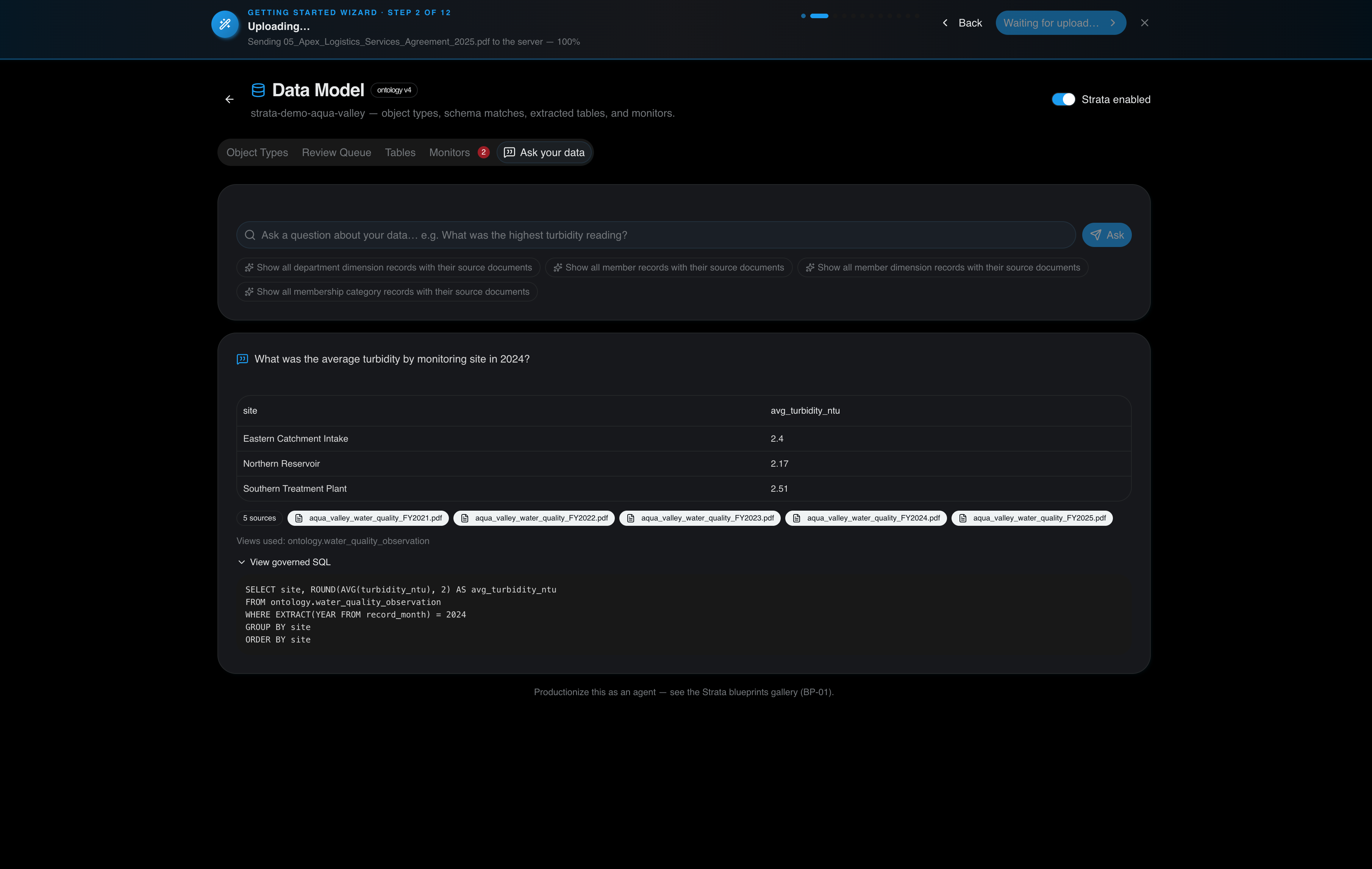
Certant's platform returns answers with citations to the source paragraph, which means the trace is part of the output rather than a separate investigation.
How to Assess AI-Generated Answer Accuracy Without Reading Everything
You cannot manually review every AI-generated answer, and you should stop trying. Accuracy assessment works through sampling, spot checks and automated flags, not exhaustive reading.
Think of it like financial audit sampling. You do not check every transaction. You check enough of them, chosen properly, to support a conclusion.
Build a brain for your business →
A practical method:
- Sample a fixed number of answers per week, chosen at random
- Include at least one high-risk category, such as contract terms or policy entitlements
- Score each answer against its cited source
- Track the failure rate over time
The failure rate is the number that matters. A stable low rate is manageable. A rising rate means something changed in your documents or your retrieval.
The AI Audit Trail and Documentation Regulators Expect
An AI audit trail and documentation set is the evidence pack you hand over when someone asks how the system behaves. It should let a reviewer reconstruct what happened without interviewing you.
A defensible pack usually includes:
- The question set used for testing
- Raw answers with timestamps
- The cited sources, with versions
- Reviewer scores and notes
- A log of changes to the underlying documents
- The date of the last full audit
Regulators and auditors tend to ask the same question in different words: can you show the reasoning path? A knowledge graph approach helps here because the link between answer and source is stored, not reconstructed after the fact. Certant's deployments are IRAP-aligned and built for sovereign, air-gapped environments. Maintaining this level of transparency ensures that the underlying logic remains robust while simultaneously satisfying the broader requirements for auditing IT security.
Spotting Hallucinations, Bias and Logical Inconsistency
Hallucinations, bias and logical inconsistency each leave different fingerprints, so test for them in different ways.
Hallucinations show up as confident specifics that do not exist: a clause number that is not in the contract, a figure that appears nowhere in the policy. The test is simple. Try to open the source. If it is not there, the answer was invented.
Bias is harder. It usually appears as a pattern rather than a single answer. Look for the same type of question getting a different quality of answer depending on which department, region or document set it touches.
Logical inconsistency is the easiest to spot and the easiest to ignore. The system gives one answer on Monday and a different one on Tuesday for the same question. That is a retrieval problem, and it undermines trust faster than an outright error.
- Check for invented specifics first
- Look for patterns across answer groups, not single answers
- Re-ask the same question on different days and compare
How Often to Audit AI Generated Answers
Quarterly full audits with monthly sampling is the pattern that holds up in practice. The full audit covers the whole question set. The monthly sample catches drift before it becomes a finding.
Increase the frequency when:
- You add a large batch of new documents
- You change the retrieval configuration
- A regulator or auditor requests evidence
- The monthly failure rate rises
Decrease it only when you have a stable record over several quarters and the document set has not changed.
The schedule should be written down, owned by a named person, and reviewed annually. An audit that happens "when we remember" is not an audit.
Conclusion: Make the Audit Repeatable, Not Heroic
The teams that pass audits are not the ones that work hardest in the week before. They are the ones whose audit runs on a schedule, produces the same evidence every time, and survives a change of staff. That is the whole point of building the process properly.
If your AI answers cannot point to the paragraph they came from, the audit will find that out. Better you find it first.
Certant builds a live knowledge graph from your own documents, returns answers with citations to source paragraphs, and runs in sovereign, air-gapped or on-premises environments. Our no-install, low-risk setup means you can start small and scale. Get started with Certant and give your auditors a trail instead of a story.
Frequently Asked Questions
How do you audit an AI-generated answer?
Start by pulling the answer and its cited sources, then check three things: does each claim map to a paragraph in a source document, is that document current and authoritative, and does the answer contradict anything else in the knowledge base. Log the result with a date and reviewer name. A consistent AI answer audit checklist matters more than a perfect one, because repeatability is what auditors actually test.
How can you check whether an AI answer is accurate?
Sample rather than read everything. Pick a spread of high-risk answers, such as contract clauses, payroll rules or policy entitlements, and verify each against the source paragraph the system cites. Track how often the citation supports the claim. If your AI-generated answer accuracy holds above your agreed threshold across samples, you have evidence to show a regulator. If it drops, investigate whether the source document or the retrieval step is at fault.
What should an AI answer audit include?
At minimum: the question asked, the answer given, the source documents and paragraphs cited, the model and version used, the date, and the reviewer's verdict. An AI audit trail and documentation set should also record what happened when an answer was wrong, who was notified and what was corrected. If your system cannot produce that record on demand, that gap is itself an audit finding.
How often should AI-generated answers be audited?
Run a light weekly sample on high-risk categories, a fuller monthly review across departments, and a complete re-audit whenever source documents change or the model is updated. Regulated firms often align the monthly cycle with existing compliance reporting. Certant's platform keeps every answer linked to its cited paragraph.
Frequently asked questions
How do you audit an AI-generated answer?
Start by pulling the answer and its cited sources, then check three things: does each claim map to a paragraph in a source document, is that document current and authoritative, and does the answer contradict anything else in the knowledge base. Log the result with a date and reviewer name. A consistent AI answer audit checklist matters more than a perfect one, because repeatability is what auditors actually test.
How can you check whether an AI answer is accurate?
Sample rather than read everything. Pick a spread of high-risk answers, such as contract clauses, payroll rules or policy entitlements, and verify each against the source paragraph the system cites. Track how often the citation supports the claim. If your AI-generated answer accuracy holds above your agreed threshold across samples, you have evidence to show a regulator. If it drops, investigate whether the source document or the retrieval step is at fault.
What should an AI answer audit include?
At minimum: the question asked, the answer given, the source documents and paragraphs cited, the model and version used, the date, and the reviewer's verdict. An AI audit trail and documentation set should also record what happened when an answer was wrong, who was notified and what was corrected. If your system cannot produce that record on demand, that gap is itself an audit finding.
How often should AI-generated answers be audited?
Run a light weekly sample on high-risk categories, a fuller monthly review across departments, and a complete re-audit whenever source documents change or the model is updated. Regulated firms often align the monthly cycle with existing compliance reporting. Certant's platform keeps every answer linked to its cited paragraph.