7 Glean Alternatives for Enterprise Search in 2026
Glean alternatives for enterprise search in 2026, compared on deployment, governance and write-back. Find the option that fits your compliance needs.
Last Updated: 19 November 2026
Quick Summary
The main Glean alternatives in 2026 are Onyx, Dust, Guru, Coveo, Moveworks, GoSearch and Certant. Onyx is open source and self-hosted at $20/user/month, while Certant is a sovereign, ontology-based platform with a free tier for regulated firms that need traceable answers and write-back.
- Onyx runs on your own infrastructure but needs engineers to patch it and keep connectors working.
- Dust uses no-code custom agents to synthesise knowledge rather than just return passages.
- Guru surfaces verified knowledge in a browser extension with verification workflows to keep answers current.
- Ask vendors to prove residency with the internet unplugged, and test on a 400-page scanned document.
- Certant Strata matched ground truth to the cent on a 414-page scanned agreement with 257 tables.
Table of Contents
- What Glean Is Good At, and Where It Stops
- How We Picked These Glean Alternatives
- The Glean Alternatives Compared at a Glance
- What to Check in Enterprise Search Tools Before You Switch
- Data Governance for AI: The Questions That Decide the Shortlist
- Certant Strata: An Ontology Layer Instead of Another Search Box
- Migration Friction and Total Cost of Ownership
- Trying Strata on Your Own Worst Document
- Frequently Asked Questions
What Glean Is Good At, and Where It Stops
If you're asking what alternatives there are to Glean, you've probably already found that it does one thing well and then hits a wall. Glean is good at finding the document you half-remember. It indexes across the usual workplace apps, understands a natural language query, and returns a passage with a link.
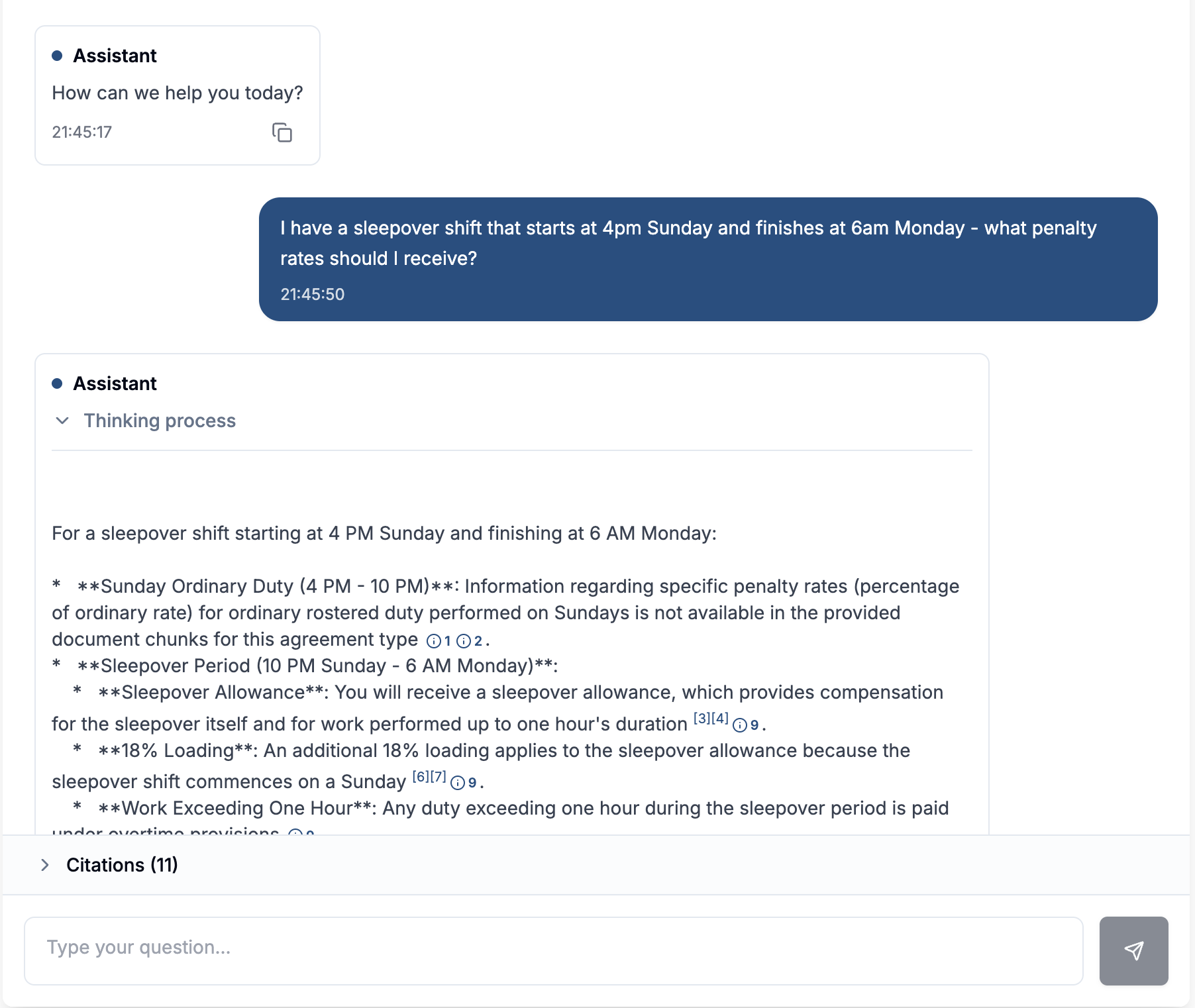
Where it stops is arithmetic and action. A chatbot that quotes documents still can't total a column across three years of reports, because standard retrieval pulls back passages, not structured data. Standard retrieval answers the question it can find a paragraph for, and fails the one that needs a number computed from a table.
That gap matters most in regulated work, where the answer has to be traceable and the system has to do something with it. The rest of this guide covers the Glean alternatives worth shortlisting in 2026, what each is actually for, and the questions that separate a demo from something your auditor will accept.
How We Picked These Glean Alternatives
We sorted the shortlist by the reason you'd leave Glean, not by feature count. Deployment model came first, because data residency rules out half the market for a lot of regulated buyers. Then provenance: can the tool show the table and page behind a figure, or only a document title? Then whether it can act, meaning write back to a system of record rather than just answer.
Industry analysis in 2026 groups the alternatives into open-source and self-hosted options, agent-led platforms, and tools tied to an existing software suite (Glean alternatives comparison(https://onyx.app/insights/glean-alternatives)). We used that split as the spine and added a fourth group for sovereign, ontology-based platforms, which is where Certant sits.
If you want the deeper roundup with pricing and Australian data residency detail, we keep a separate write-up of eight Glean alternatives sorted by why you're leaving.
The Glean Alternatives Compared at a Glance
Here's the shortlist at a glance. Pricing depends on the vendor's current terms, so check each vendor's website or ask for a quote.
| Platform | Model | Best for | Published entry price |
|---|---|---|---|
| Certant | Sovereign, ontology-based | Regulated firms needing traceable answers and write-back | Free tier available |
| Onyx | Open source, self-hosted | Technical teams wanting to host it themselves | $20/user/month |
| Dust | Agent-led | Teams moving past search into task automation | Quote only |
| Guru | Knowledge management | Support and sales teams in the browser | Free tier available |
| Coveo | Enterprise search and relevance | Large enterprises with complex data | Quote only |
| Moveworks | Support automation | IT and HR ticket deflection | Quote only |
| GoSearch | Unified SaaS search | Quick deployment across fragmented tools | Quote only |
A table like this is a starting point, not a decision. The criteria that actually separate these tools are deployment model, provenance, and whether the system can act on what it finds. Deployment model comes first because data residency rules out half the market for regulated buyers. Provenance matters because a document title is not a citation; you need the table and page behind a figure. Action matters because answering a question and updating a system of record are different jobs.
Open source and self-hosted
Onyx is the open-source option people reach for first. It runs on your own infrastructure. The trade-off is operational: you need engineers to run it, patch it, and keep the connectors working. For a technical team that wants control, that's a fair trade. For a compliance team without a platform engineer to spare, it isn't.
Agent-led and knowledge management
Dust differentiates itself from standard enterprise search by using no-code custom agents to do tasks beyond retrieval, such as synthesising knowledge rather than just returning it (Dust on AI enterprise search(https://dust.tt/blog/glean-alternatives-ai-enterprise-search)). Guru takes a different route: a browser extension that surfaces verified knowledge inside whatever tab you're already working in, with verification workflows to keep answers current. Both are good at what they do. Neither is built to compute a figure from a scanned table.
Moveworks and GoSearch round out this group. Moveworks resolves IT and HR requests directly, which is support automation rather than general search. GoSearch aggregates SaaS tools behind one permission-aware interface and is quick to stand up.
Sovereign and ontology-based
This is the group that exists because search alone isn't enough. Practitioners argue that finding documents is now a legacy requirement, and the focus should be on a governed knowledge layer that can write back to systems of record (PromptQL analysis(https://promptql.io/blog/glean-alternatives-for-company-knowledge)). Organisations are also seeking self-hosted or region-hosted deployment to meet data residency requirements (EXTERNAL_LINK: Teamazing on sovereign deployment | teamazing.com).
Certant is the pick here. Strata builds an ontology of the business (a working model of what a contract, an invoice, a member or a pay rate is, and how they link) from the sources you already have. That model is what lets the platform do arithmetic, trace a figure to its page, and push an approved change back into Xero or iMIS. If you're weighing the two directly, we've set out the Glean and Certant comparison on deployment and citations.
How to read the table
Use the table to shortlist, then test each shortlisted tool against your own worst document. The questions that matter are whether the system can show the source table and page behind every figure, whether it can limit which records a person or agent sees by row rather than by document, whether it keeps an audit trail of every agent action, and whether it declines to answer when the data can't support one.
Watch out: a free tier or a low per-user price can hide the cost of the engineering time needed to keep connectors working and the model correct, so compare total cost of ownership rather than licence price alone.
What to Check in Enterprise Search Tools Before You Switch
Ask where every document and every model call physically goes, and have the vendor prove it with the internet unplugged. That single test removes a lot of the shortlist.
Then click an answer and check you land on the exact source page, not just a document title. Ask a question that needs arithmetic across several documents; quoting a paragraph is the easy part. Ask something the documents don't cover and see whether the system refuses or makes something up. Finally, test on your own worst document, a 400-page scan full of tables, and skip the vendor's clean sample.
For a structured version of this with a trial test per requirement, we keep an evaluation checklist for enterprise knowledge platforms.
Data Governance for AI: The Questions That Decide the Shortlist
For regulated industries, compliance with frameworks such as ISO 42001, FFIEC and HIPAA, alongside per-call audit capability, are the primary decision drivers for enterprise search selection (EXTERNAL_LINK: ExploreAgentic.ai insights | exploreagentic.ai). That changes the shortlist more than any feature comparison.
Data governance for AI comes down to four questions. Can the system show the source table and page behind every figure? Can it limit which records a person or agent sees, by row rather than by document? Does it keep an audit trail of every agent action? And does it decline to answer when the data can't support one?
On-prem from a cloud vendor can mean your data sits in your region while a cloud control plane still runs the show. Air-gapped means the box works with the network cable unplugged. If residency is the deciding factor, we've written about running a knowledge graph on your own hardware.
Certant Strata: An Ontology Layer Instead of Another Search Box

Most AI tools search documents as a bag of text. Strata gives the knowledgebase, chatbots, agents and analytics one shared model of the business, so they stop disagreeing with each other.
Here's the loop as it applies to a compliance problem. Strata connects the sources you already have, including the tables inside PDFs, spreadsheets, SharePoint, Xero and iMIS, and proposes an ontology: object types, properties and the links between them.
Every figure traces back to the table and page it came from, and Strata says so when the data can't answer a question. You can see how Strata turns report tables into live data.
Migration Friction and Total Cost of Ownership
The cost that sinks these projects isn't the licence. It's the migration and the maintenance nobody budgeted for. Most articles list tools and stop there. This section is about the work between choosing a tool and running it, and how to price that work before you commit.
Migration friction
Switching search providers means mapping your data sources to the new tool's connector model, re-creating permission mappings, and deciding what happens to the queries and saved searches your team already relies on. The technical debt shows up in three places. Connector drift: the APIs behind SharePoint, Slack and your line-of-business systems change, and someone has to keep the connectors working. Permission mapping: row-level and document-level permissions rarely map one-to-one between systems, so you end up rebuilding access rules by hand. Re-ingestion: if the tool re-learns your organisation from scratch on each rebuild, any corrections you made are lost and you pay the setup effort again.
A common pattern is to run the old and new systems in parallel for a quarter while you validate answers against known-good results. That parallel run is a cost line, not a footnote.
Total cost of ownership framework
Total cost of ownership comes down to four lines: licence, implementation, ongoing maintenance, and the cost of being wrong. Licence is the subscription or per-user fee. Implementation covers connector setup, permission mapping, and the parallel run. Ongoing maintenance covers engineering time to keep connectors working and the effort to keep the model correct. The cost of being wrong covers the rework when a figure is traced to the wrong page or an action is written back to the wrong record.
Ask what happens to your corrections when the documents are re-ingested. If the answer is that they're lost, you're paying for that work again next quarter. Ask whether the tool can show the query it ran and the table and page behind every figure, because that is what makes an audit pass rather than a demo look good.
Performance benchmarking
Define how you'll measure search success before you pilot. Latency is the easy one. Precision and recall matter more: does the tool return the right passage, and does it return all the passages that matter? Time-to-answer is the one your users feel. A tool that is fast but wrong is worse than a tool that is slow and right. Test on your own worst document, a 400-page scan full of tables, and compare the extracted figures against ground truth.
Watch out: a vendor's benchmark on a clean sample tells you little about how the tool handles your scanned tables and permission mappings, so insist on a pilot on your own data before you sign.
Trying Strata on Your Own Worst Document
Don't evaluate on the vendor's clean sample. Take the scanned agreement that gives your team trouble, the one with tables spanning pages, and ask a question that needs a figure from it.
At Certant, extracted figures from a 414-page scanned enterprise agreement with 257 tables matched ground truth to the cent. That's the test worth repeating on your own document before you commit to anything.
Start with one problem and one set of sources, get the ontology right for those, then add monitors and actions once the model holds up. You can start free at certant.ai.
The shortlist above narrows fast once you test on a real document and ask for the source page behind a figure. Certant Strata builds an ontology from the sources you already have, traces every answer to the table and page it came from, and writes approved changes back to Xero, iMIS or any system with an API. It runs air-gapped inside your own infrastructure.
Frequently Asked Questions
Who are Glean's biggest competitors for enterprise search?
The field splits into three groups: open-source and self-hosted options, agent-led platforms, and ontology-based platforms such as Certant Strata, which build a model of the business rather than indexing text. The right pick depends on whether you need search, action, or both.
What should I look for in enterprise search tools before switching?
Start with the questions that decide the shortlist: where every document and model call physically goes, whether answers cite the exact source page rather than a document title, and whether the system refuses to answer when the data cannot support one. Test a question that needs arithmetic across several documents, not just a quoted paragraph. Then ask what happens to your corrections when documents are re-ingested. A tool that re-learns from scratch on every rebuild will undo your work.
How does data governance for AI change the comparison?
Governance is usually the deciding factor in regulated organisations. Look for row rules that limit which records a person or agent sees, masking on sensitive fields, and an audit trail for every agent action. Provenance matters as much: every figure should trace back to the table and page it came from. If your auditors ask how the system reached an answer, a black box fails the test. Ask the vendor to show you the trail on your own documents.
Can enterprise AI platforms write back to my existing systems?
Some can, and it changes what you are buying. Certant Strata has native connectors for Xero and iMIS covering invoices, contacts, member records, subscriptions and payments, and any other system with an API can be written to through HTTP write-back. A write waits for approval with a reason and a risk tier, is logged, and can be reversed where the target system supports it. Search-only platforms stop at retrieval, so every action stays manual.