An evaluation checklist for enterprise knowledge platforms
The provenance, governance and integration requirements to put in an enterprise knowledge platform evaluation, with a question to ask and a trial test for each.
Evaluate an enterprise knowledge platform on your own documents, against requirements you wrote before the demos started, in three groups: provenance (can every answer be traced to a passage in a specific version of a document), governance (who can see what, what gets logged, where the data and the model run) and integration (does it reach where your knowledge actually lives). Score each platform on what happened when your team asked real questions of their own files.
Below is the checklist I'd use, the questions to ask for each item, and how to test it in a trial. I build one of these platforms, so I've also said where Certant is weaker than the alternatives.
What the evaluation process looks like
- Write the requirements first. A page per group, with a weight against each. Do this before any vendor presents, so the demo doesn't write your criteria for you.
- Shortlist three vendors. More than that and nobody runs the trials properly.
- Build a test set. 50 to 100 real documents, including scans, tables and at least one policy that has been replaced. Then write 30 questions with known answers and 5 the documents can't answer.
- Run the same trial on each. Same documents, same questions, same people marking the answers.
- Run the security review in parallel. It takes longer than the trial, so start it in the first week.
- Pilot the winner with one team for a month before signing anything long term.
Four to eight weeks is normal. Most of that time goes on the security review.
Provenance requirements
Provenance is whether you can show where an answer came from. In a regulated organisation it's usually the deciding group, and it's the one vendors are least specific about.
| Requirement | Ask the vendor | Test it |
|---|---|---|
| Citations point to a passage | Does a citation open the document at the paragraph, or link to the file? | Click 20 citations. Count how many land on text that supports the sentence. |
| Document version is recorded | Can I see which version of a document an answer cited last month? | Replace a document, then look up an answer given before the change. |
| Replaced documents are flagged | What happens when two versions of a policy are both loaded? | Ask a question where the old and new versions disagree. |
| It declines when the documents are silent | What does it do when nothing relevant is found? | Ask your 5 unanswerable questions. Any confident answer fails. |
| Numbers are traceable | Are figures read from the table, or written by the model? | Ask for a rate from a scanned schedule and check it against the page. |
| Corrections are kept | When my team corrects an answer, where does the correction live, and does it survive a re-index? | Correct something, reload the documents, and ask again. |
Governance requirements
| Requirement | Ask the vendor | Test it |
|---|---|---|
| Source permissions carry through | Does it apply the access rules from SharePoint, Drive or Confluence when it answers? | Ask as a user who can't open the source file. |
| Single sign-on and provisioning | Which identity providers? Is SCIM supported, so leavers lose access the same day? | Remove a test user in your identity provider and try to sign in. |
| Audit log | What's logged, can entries be changed, how long are they kept, can they go to our SIEM? | Ask for the log of your own trial questions. |
| Where data and models run | Which country? Which outside companies process our data? Can it run in our cloud or offline? | Read the sub-processor list and check each one. |
| Training on our data | Is our data ever used to train or tune a model? | Check that the contract says so. |
| Independent assurance | Which certifications are held, and which are only "aligned"? | Ask for a copy of each report. |
Integration requirements
| Requirement | Ask the vendor | Test it |
|---|---|---|
| Reaches your sources | Which of our systems are connected out of the box, and which need building? | List your top ten knowledge sources and tick them off. |
| Reads hard documents | How are scans, tables and long PDFs handled? | Load your worst 400-page scanned agreement. |
| Stays current | How do changed documents get picked up, and how quickly? | Edit a source document and time how long until answers change. |
| Answers where people work | Teams, Slack, the intranet, a website widget? | Install it where your pilot team works. |
| Feeds your agents | Can our own agents and workflows use the same knowledge through an API? | Call the API from a test script. |
How to weight the groups
Weight by consequence. If a wrong answer could reach a customer, a regulator or a pay decision, give provenance 40%, governance 35% and integration 25%. For an internal search tool with low stakes, integration can reasonably carry the most weight, because a tool nobody can reach from their own systems doesn't get used.
Set a pass mark for the unanswerable questions separately, and make it a gate. A platform that invents answers to two of your five shouldn't win on its connector count.
Red flags during the trial
- The vendor wants to load your documents for you and show the results later.
- Citations link to the file, and you have to search the file to find the passage.
- Every question gets an answer, including the ones you wrote to be unanswerable.
- "Enterprise-grade security" with no sub-processor list.
- Logs are available "on request".
How Certant measures up on this list
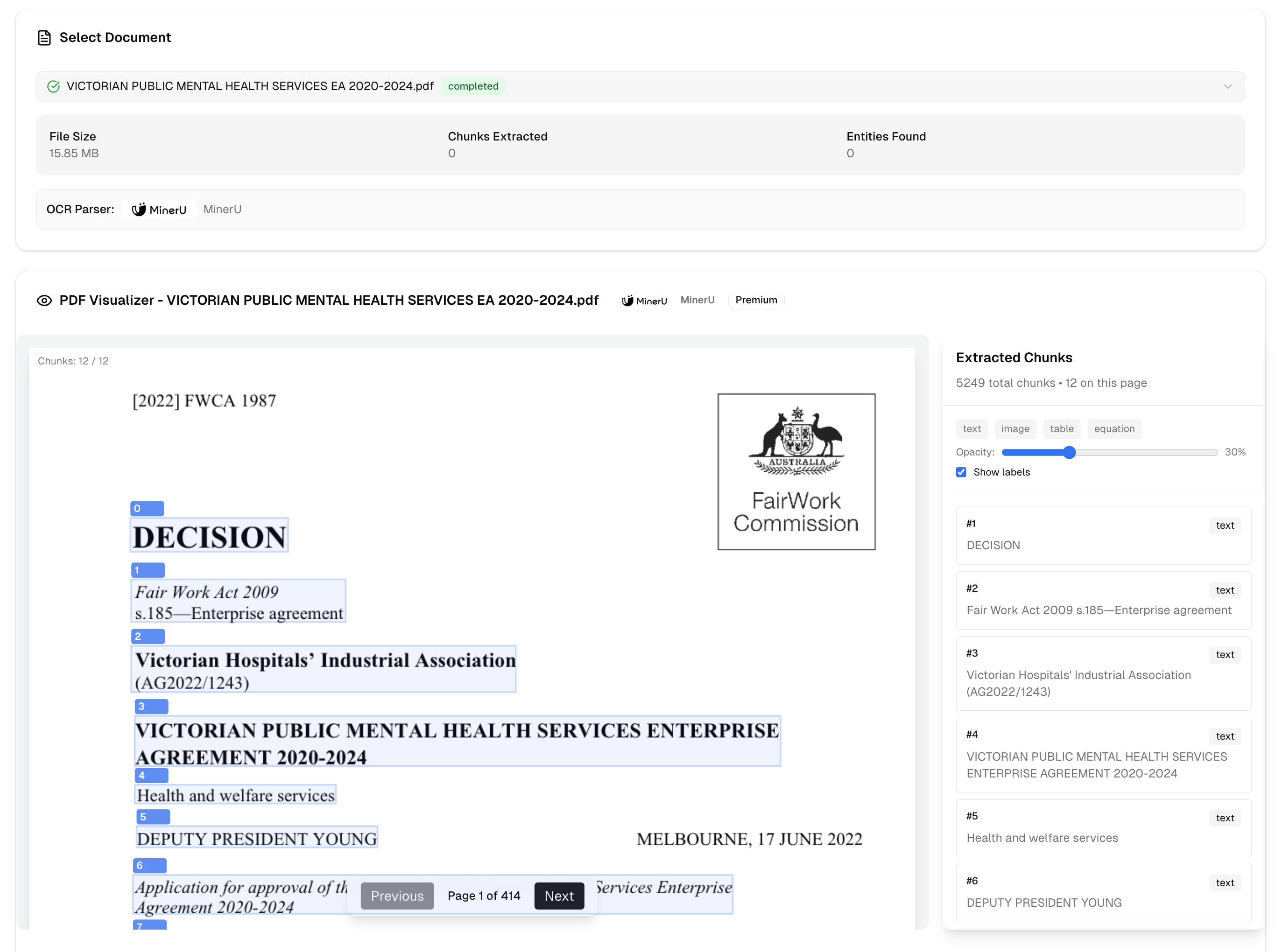
Certant is built around provenance. Every answer cites the source, and one click opens the document at the paragraph it came from. It flags documents that contradict each other and documents that have been replaced, declines when the documents are silent, and keeps your team's corrections in a ledger that's applied again whenever documents are reloaded. A separate reader handles each kind of file, so tables keep their rows and columns and scans are read with OCR; Strata turns tables into data you can query with SQL.
On governance, Certant applies the per-document access rules from SharePoint, Google Drive, Confluence and Box at query time, supports OIDC, SAML and SCIM, and writes an append-only audit log that streams to your SIEM. It runs in Certant Cloud (Australian, European and US regions), in your own cloud account, or fully offline. It has SOC 2-aligned controls but no SOC 2 report, which matters if your procurement rules require one. On a sovereign deployment it's assessed inside your own boundary.
On integration, Certant connects to fewer workplace apps than Glean, which lists more than 250. It covers SharePoint, Confluence, Google Drive, Box, S3 and your website, with Slack and Teams apps and an API. If you mainly need to search Slack threads, tickets and code across hundreds of tools, a broader enterprise search product will suit you better. I've compared the two in detail on Certant vs Glean, and there's a summary of what regulated buyers check on enterprise search for regulated industries.
Frequently asked questions
What provenance requirements should go into a knowledge platform evaluation?
Passage-level citations, a record of which document version each answer cited, flags on replaced documents, refusal when the documents are silent, figures read from the source table, and corrections that survive a re-index.
What should enterprises look for in a trusted knowledge platform?
Answers you can trace to a passage, source permissions applied when it answers, an audit log you can export, clear answers on where data and models run, and good results on your own documents in a trial.
Which search solution suits a highly regulated industry?
One that passes the provenance and governance groups above on your own documents, and can run where your regulator expects the data to be. For some organisations that means an Australian cloud region; for others, their own network.
Can we run this checklist against Certant?
Yes. Start with the free trial, which covers about 50 pages or 100 questions, or book a call to plan a full evaluation and security review.