
- Data lands
- One model
- Alert with reach
- Try on a copy
- Second person approves
- Recorded
- Next time, one click
Simulate the decision without changing your data
Change a price, a supplier, demand or a recipe on a copy of today's business. Your live data stays as it is.
A copy is a working version of your model that you can change freely. Strata works out what each change would do and sets the results beside today.
Screens show Stonefold Foods, a demo organisation with synthetic data.
One fix breaks two contracts
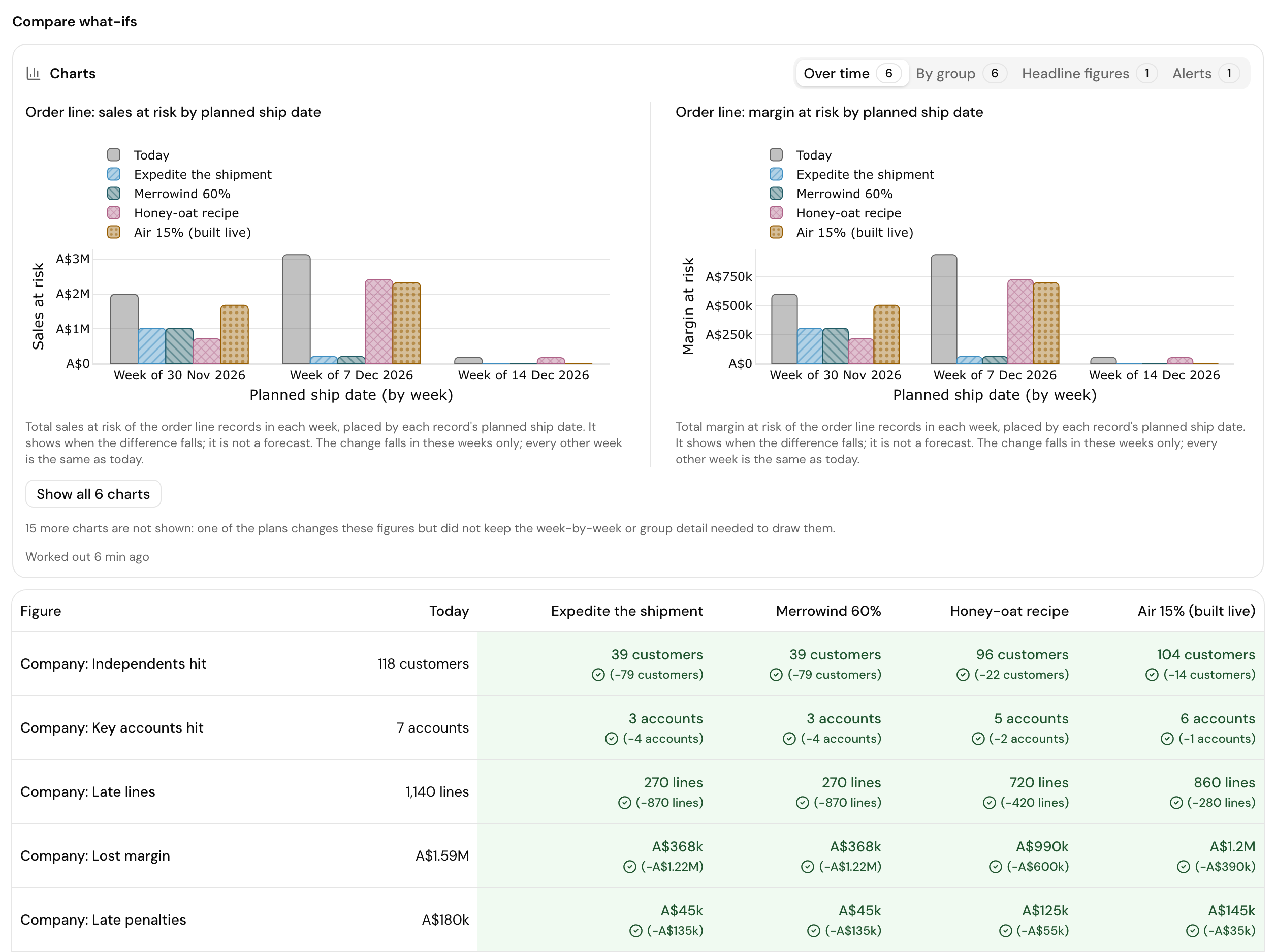
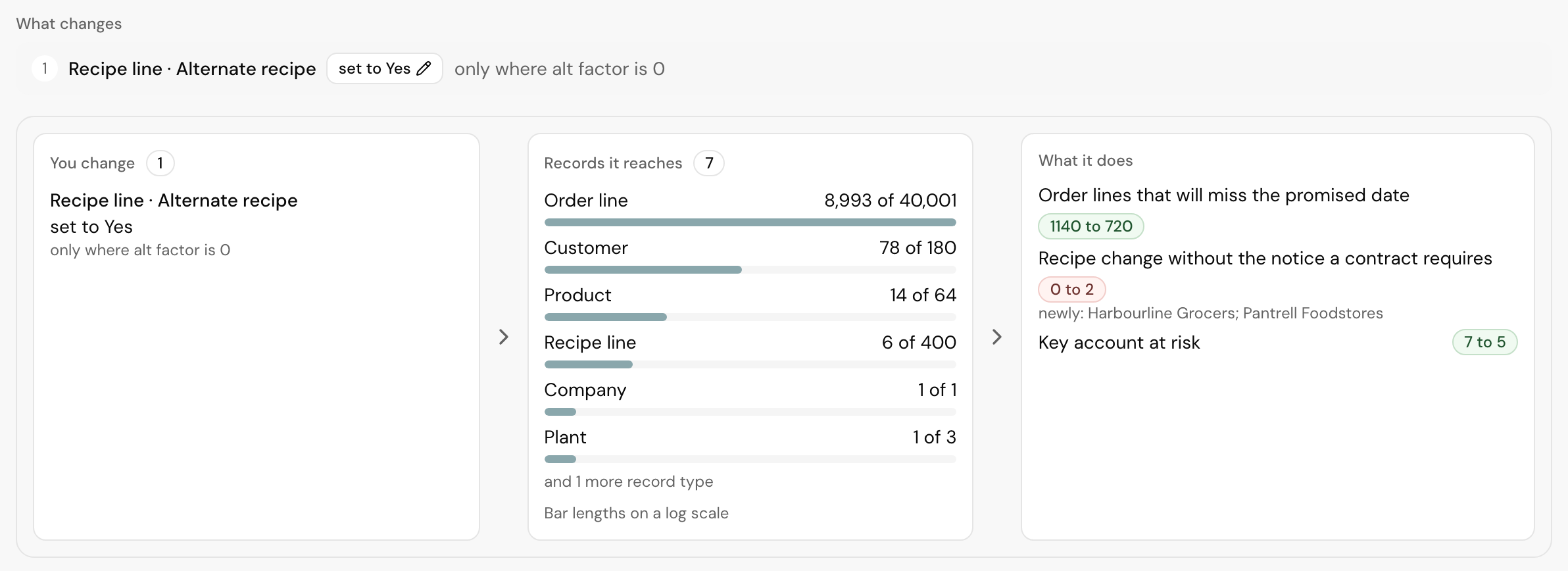
The recipe change cuts late lines from 1,140 to 720, but it breaks the notice terms in two key-account agreements.
Stonefold Foods, a demo organisation with synthetic data, tried four answers to a notional cyclone on a copy. Both agreements need 30 days' written notice of a recipe change, a term Strata read from the contract PDFs. Only the copy shows the breach, before anyone commits.
| Option on a copy | Total cost | Key accounts hit |
|---|---|---|
| Today, no change | A$1.77M | 7 |
| Expedite the shipment | A$508k | 3 |
| Alternate supplier, 60% | A$465k | 3 |
| Recipe change | A$1.15M | 5, and 2 contract notices breached |
| Air freight, 15% | A$1.40M | 6 |
Every option is tried first
A copy answers four needs before anyone commits to a change.
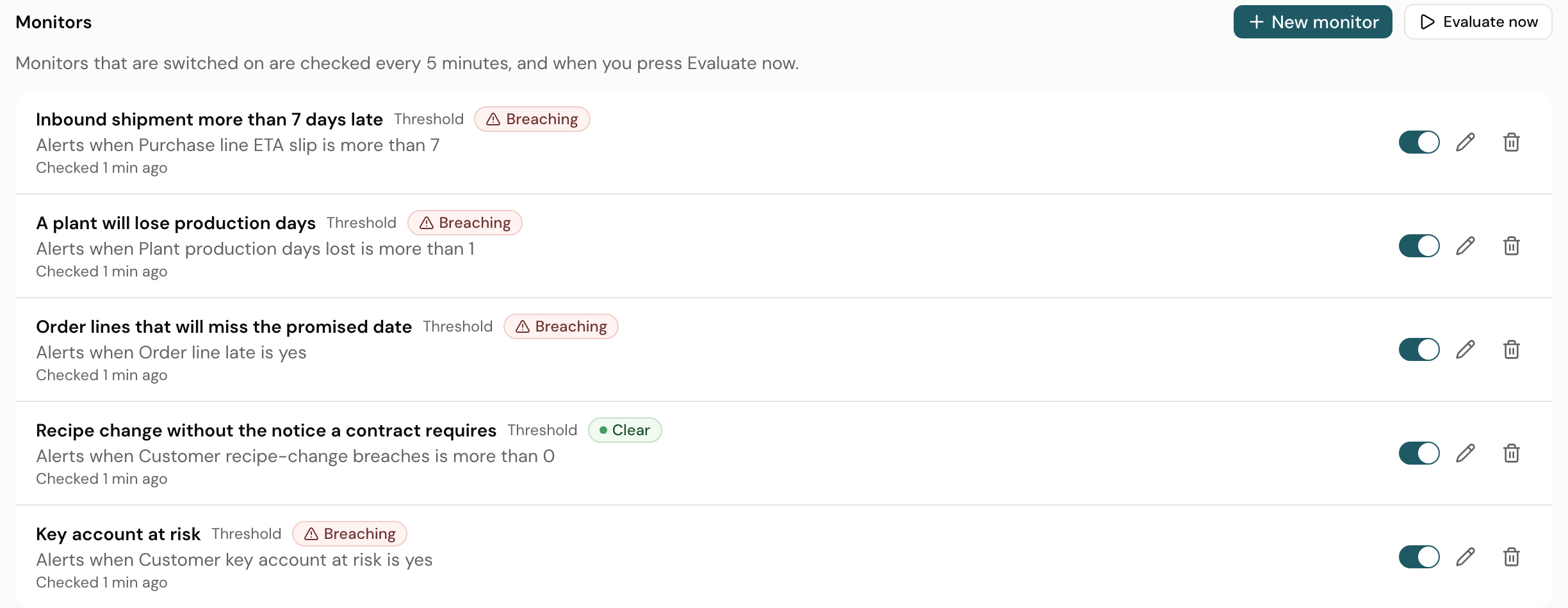
Change one property, for every record or only those a filter picks. Strata shows the headline figures, the monitors the change would trip and the named records it touches.
Set any number of options beside today. Each shows key accounts hit, late lines, lost margin and late penalties, week by week.
If no option on the list fits, add a lever in a plain-English form: pick the record type, the property, the new value and a filter. Save it as a playbook to run again on today's data in one click.
How a saved response becomes a playbook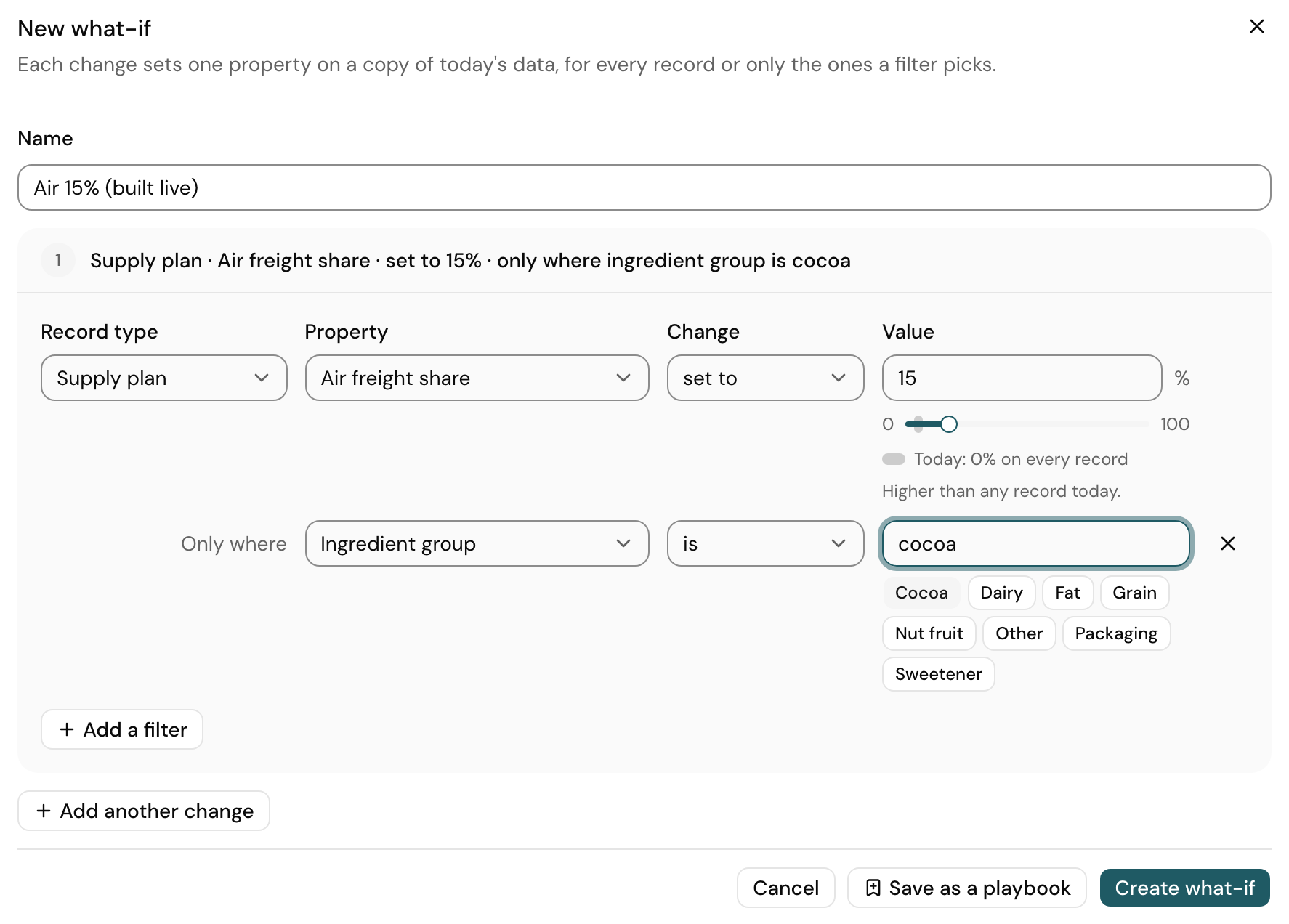
Run any plan again under a harder assumption, such as 14 more days of supply delay. A test like this is marked what-if only, so it cannot be applied.
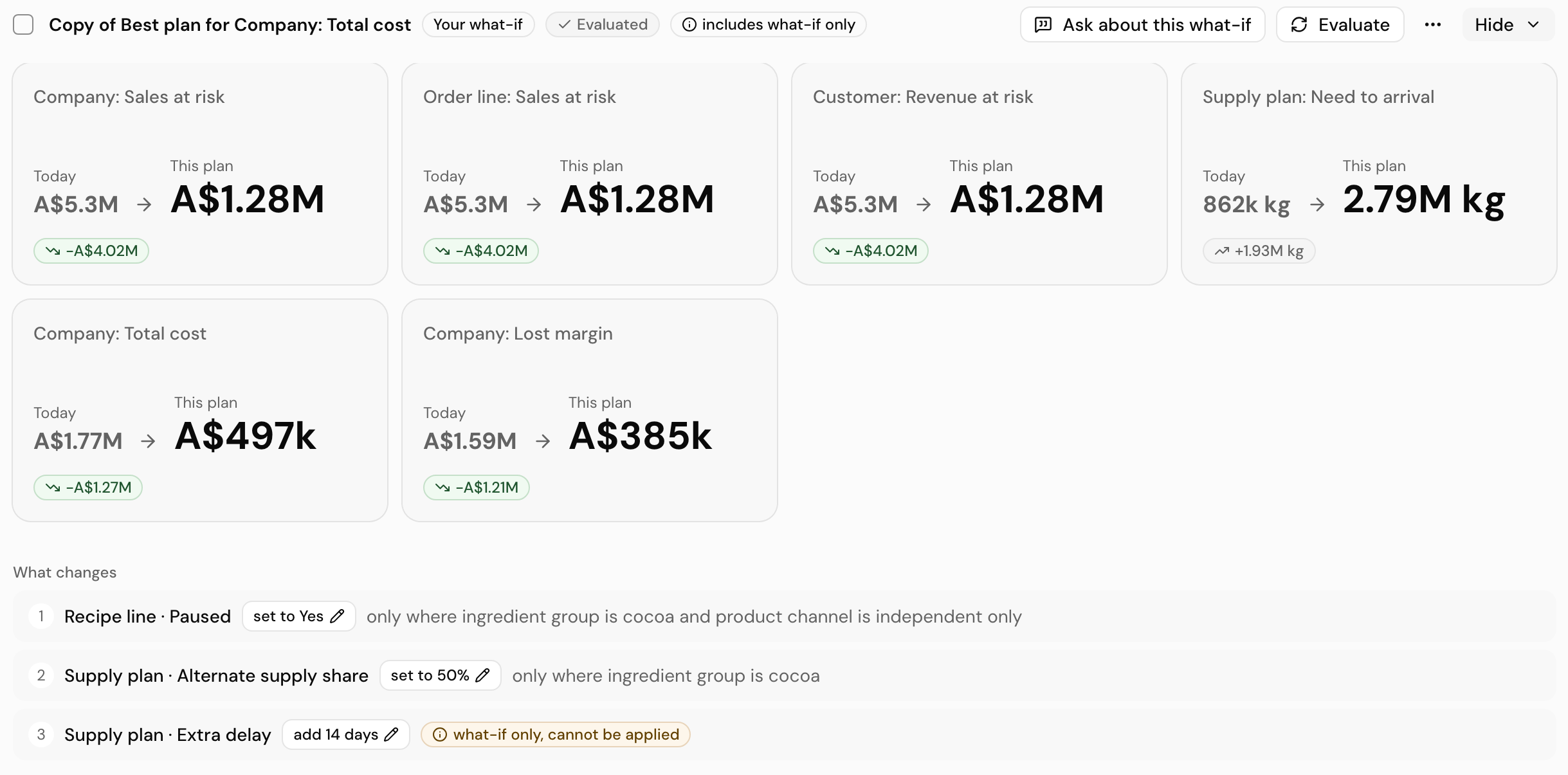
Then the assistant found a cheaper plan.
How long does a shock like this take your team today?
Bring your own documents and feeds. We will walk the same loop on them.
AI and agents propose, a second person approves, and every step is recorded.
The same rules for people and agents